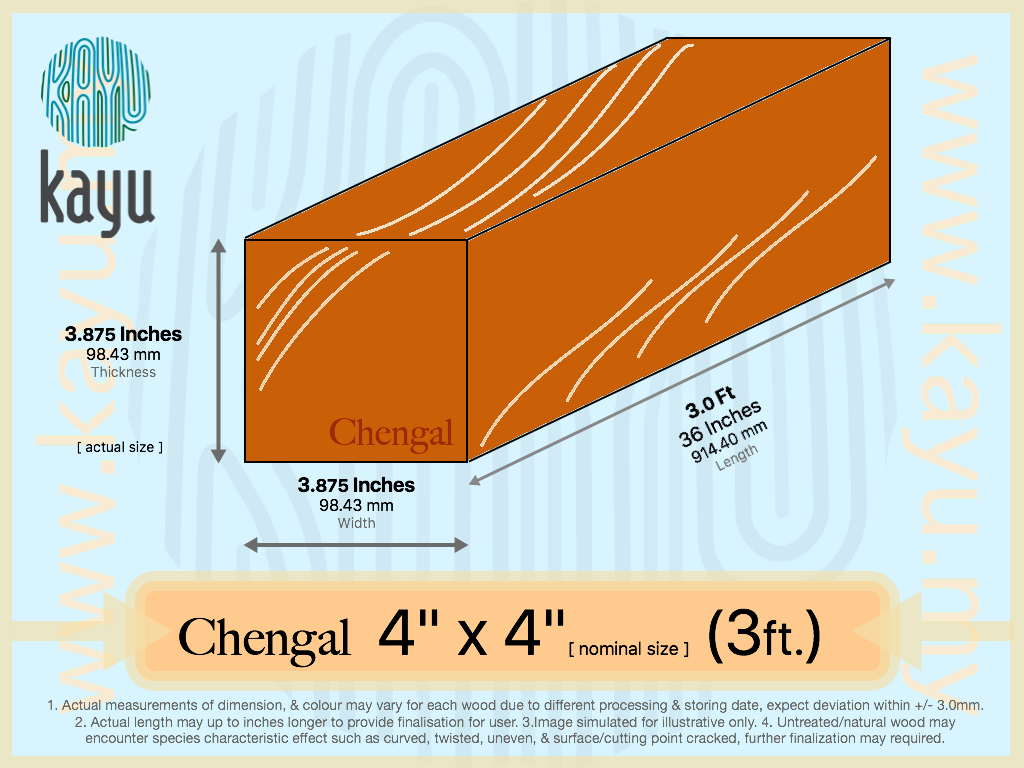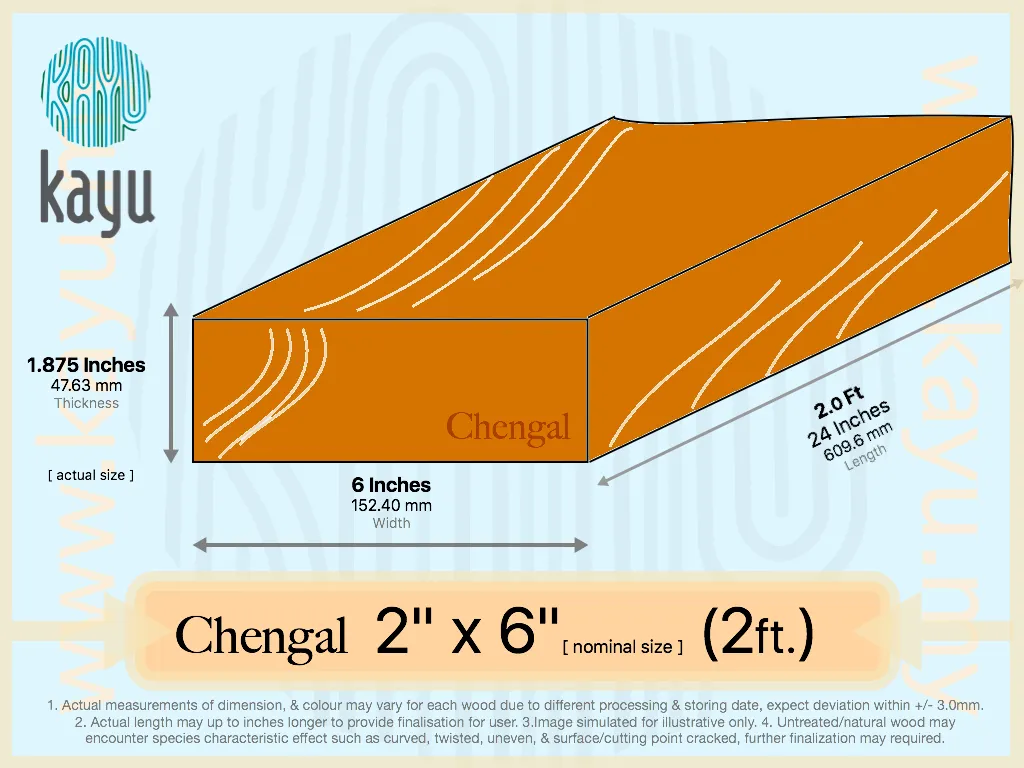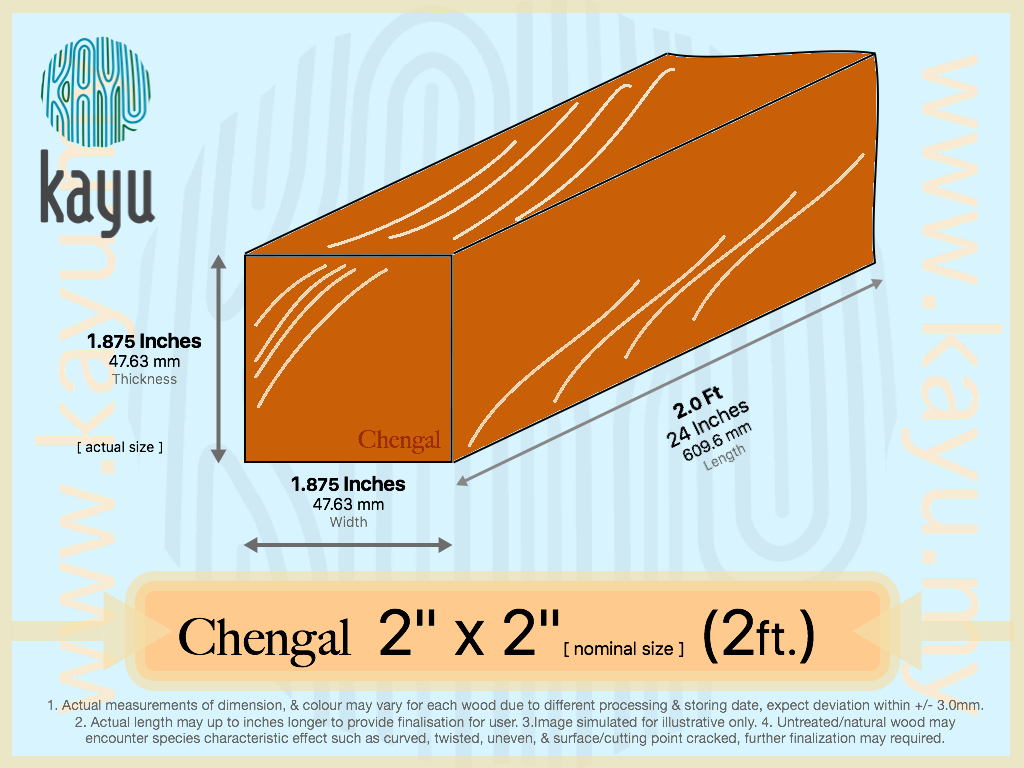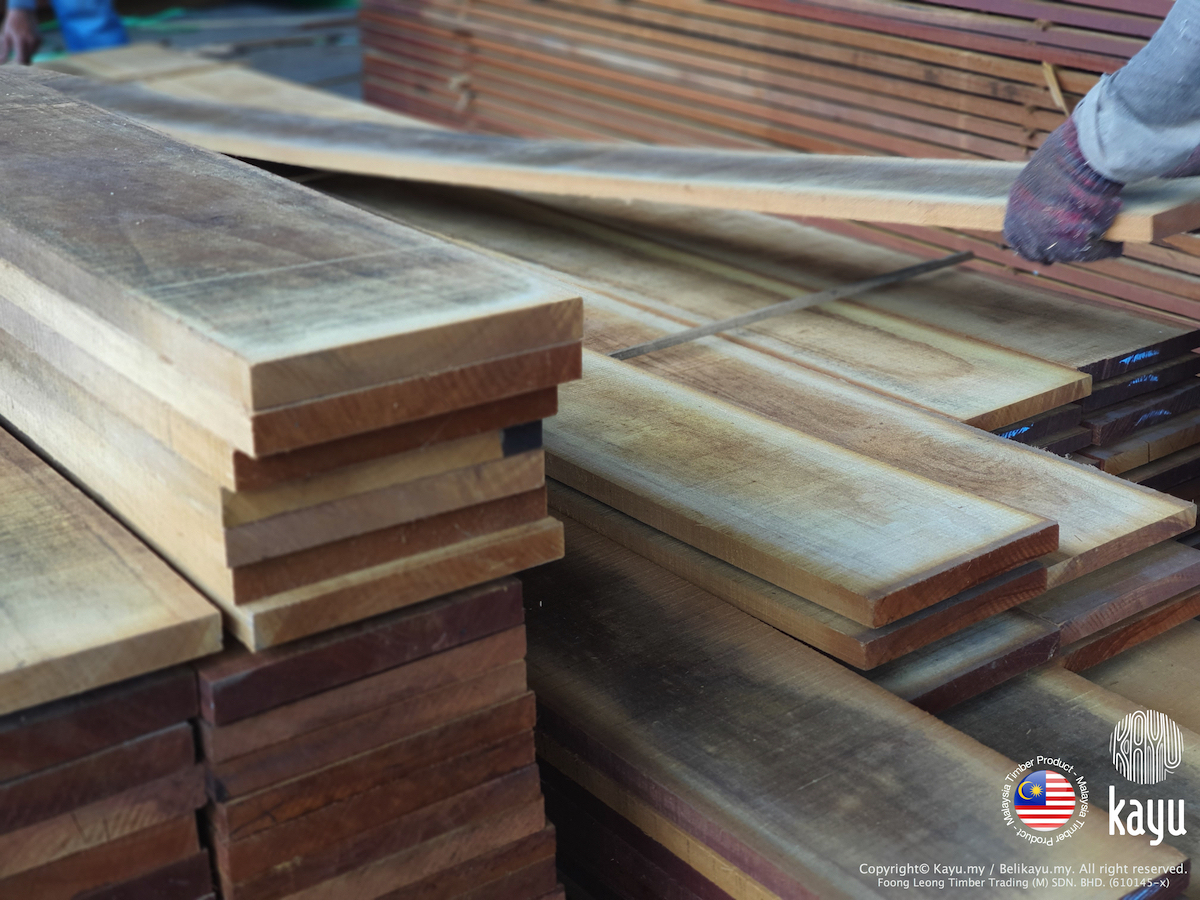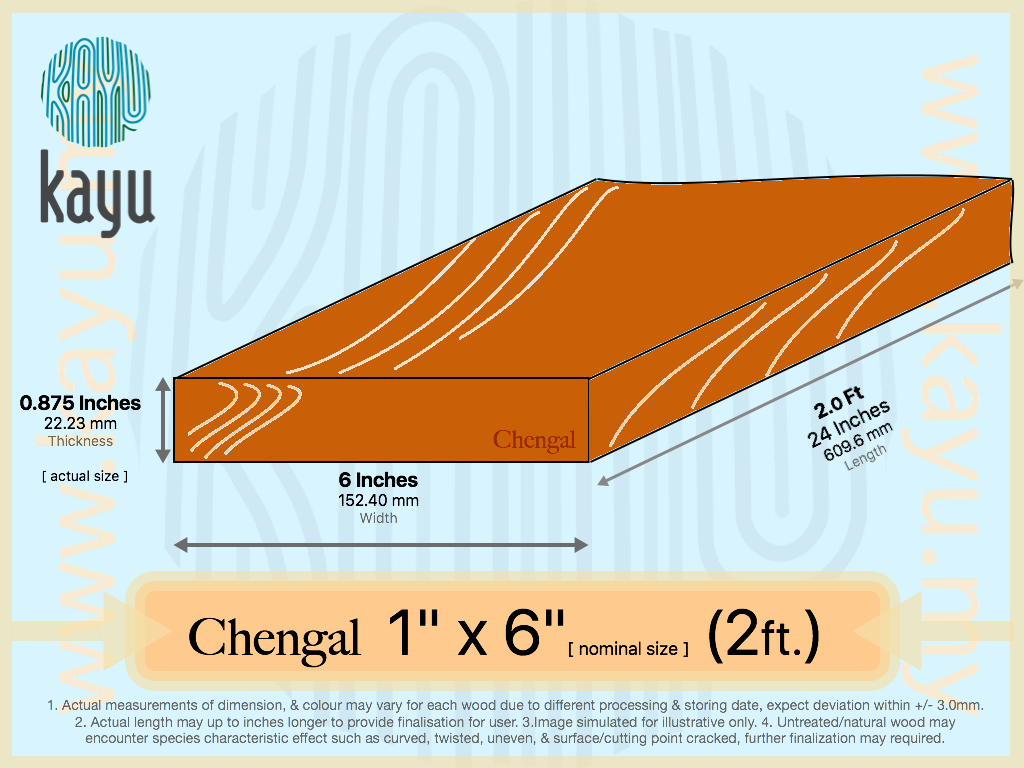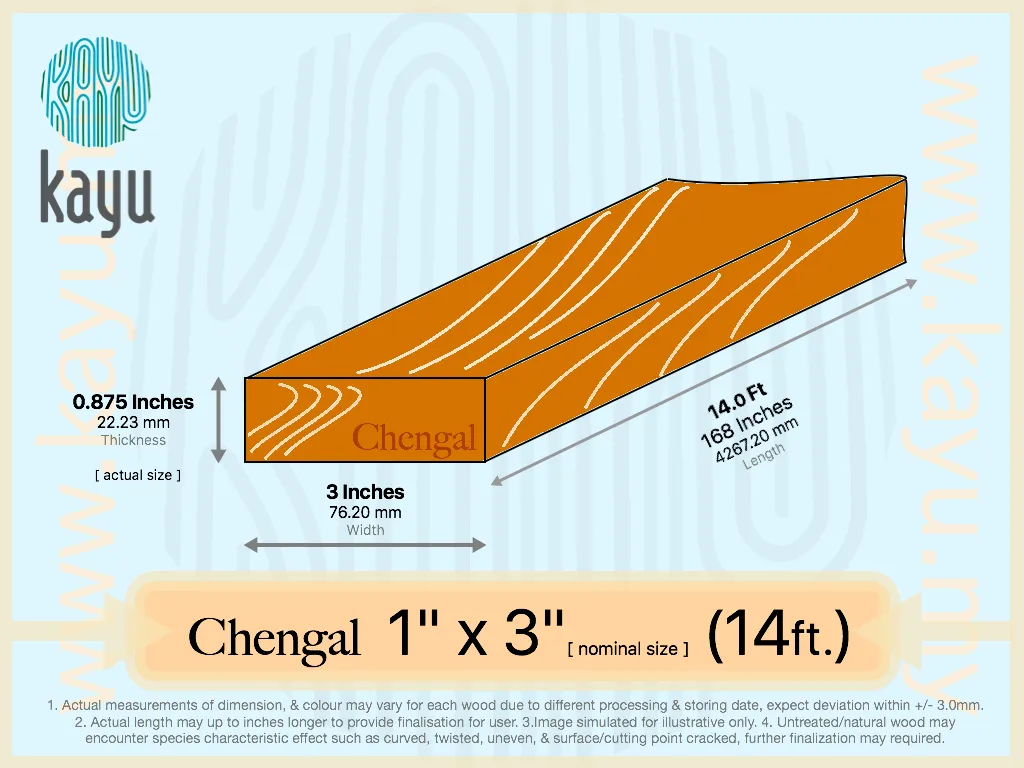


The Standard Malaysian Name for the timber of Neobalanocarpus heimii (Dipterocarpaceae). Vernacular names applied include penak (Peninsular Malaysia). The name chengal is so popular, that many other species have been given vernacular names bearing the name chengal. Neobalanocarpus is a monotypic genus. The sapwood is light yellow and sharply defined from the heartwood, which is light yellow-brown with a distinct green tinge, darkening on exposure to dark purple-brown or rust-red.
Also known as Chengal (Brunei); and Chan Ta Khien, Chi-ngamat, Takian Chan and Takian Chantamaeo (Thailand).
DENSITY
The timber is a Heavy Hardwood with a density of 915-980 kg/m3 air dry.
NATURAL DURABILITY
The timber is classified as naturally durable and is normally very resistant to termite attack and fungal infestation. Under graveyard test conditions, untreated specimens of size 50 mm x 50 mm x 600 mm lasted 9 years. Treated specimen of the same size and test conditions lasted about 19 years. Untreated railway sleepers of size 238 mm x 125 mm x 1,950 mm laid under severe environmental conditions gave an average service life of 19 years.
PRESERVATIVE TREATMENT
This timber has been classified as moderately difficult to treat.
TEXTURE
Texture is fine and even, with shallowly to deeply interlocked grain.
STRENGTH PROPERTIES
The timber falls into Strength Group A (Engku, 1988b) or SG 1 (MS 544:Part 2:2001).
NAILING PROPERTY
Nailing property is rated as very poor.
AIR DRYING
The timber seasons slowly with moderate end-checking and surface-checking as the main sources of degrade. 13 mm thick boards take approximately 5 months to air dry, while 38 mm thick boards take 6 months.
SHRINKAGE
Shrinkage is fairly low, with radial shrinkage averaging 1.1% and tangential shrinkage averaging 2.6%.
DEFECTS
Small pin-holes, caused by ambrosia beetles boring into the living trees, are a common and characteristic defect of chengal. These small holes are often numerous, but although unsightly, they are only in exceptional cases sufficiently numerous to impair the strength of the timber. These ambrosia beetles die when the timber is seasoned and thus the damage is restricted almost entirely to that which occurs in the green timber. Big trees of chengal are sometimes hollow at the centre and badly attacked by large borers, and occasional trees are seriously infected by a fungus (Fomes spp.), which initially gains entry through broken branches or other wounds and eventually reduces the timber to a dark pulpy condition. With the exception of pin holes, the timber of chengal is free from knots and other defects characteristic of sawn timber.
USES
The timber is suitable for all forms of heavy construction, railway sleepers, heavy duty furniture, laboratory benches, bridges, marine construction, boat building, telegraphic and power transmission posts and cross arms, piling, mallets, flooring (heavy traffic), decking, vehicle bodies (framework and floor boards), fender supports, cooling towers (structural members), staircase (balusters, carriages, handrails, newels, risers, stringers, treads, bullnoses, round ends and winders), columns (heavy duty), door and window frames and sills, tool handles (impact), carving works and other uses where strength and durability are required.
Information by "mtc.com.my".