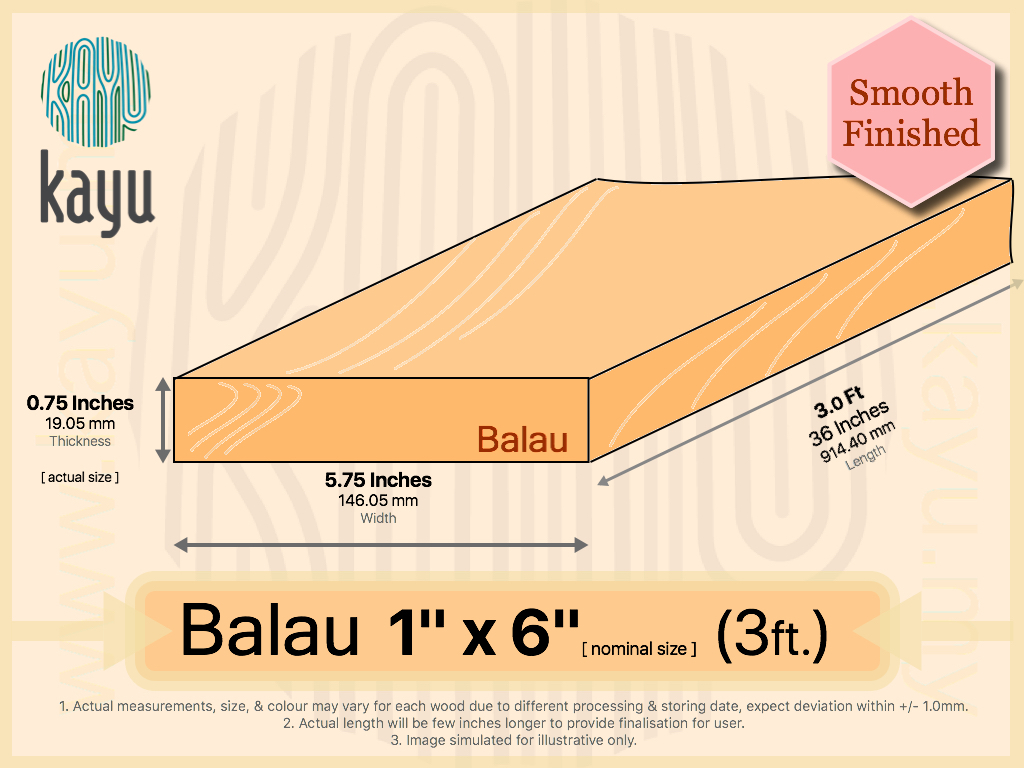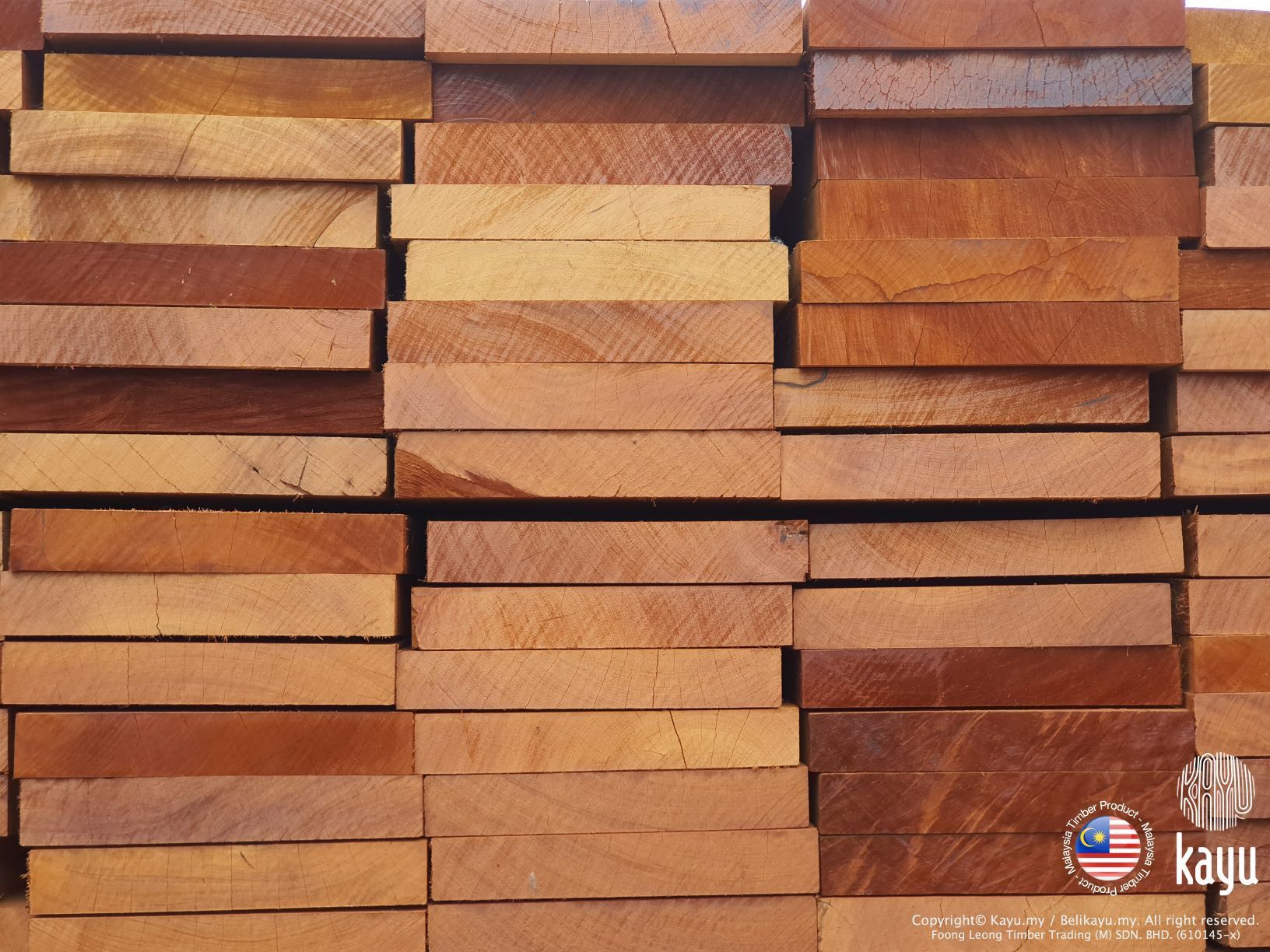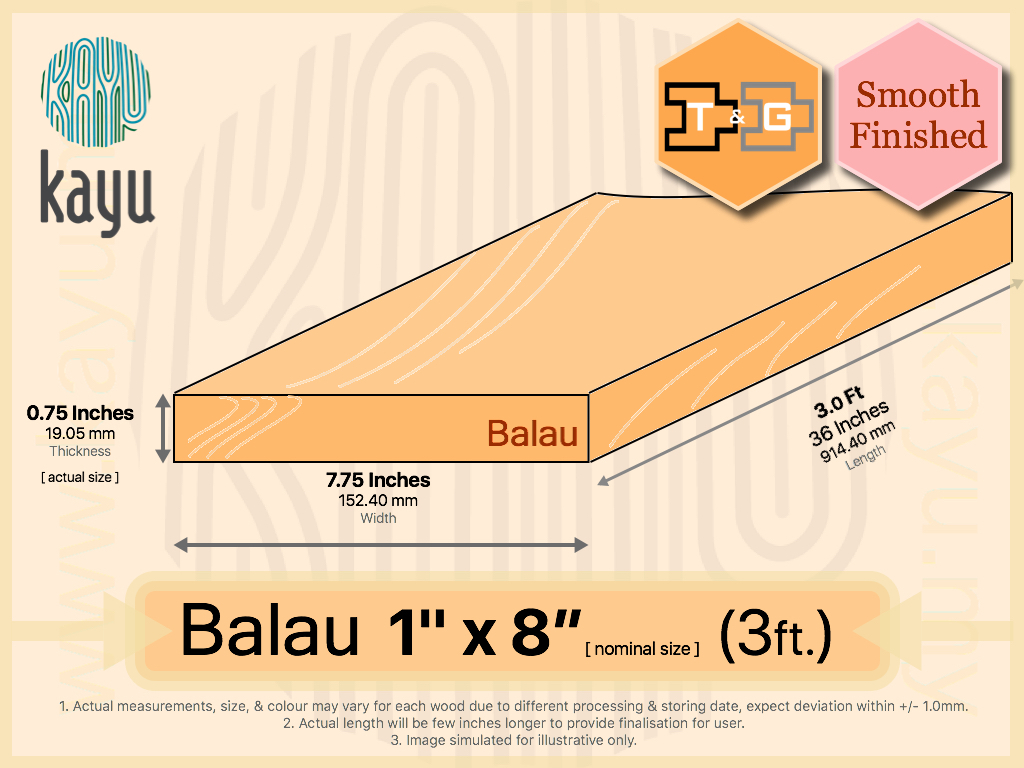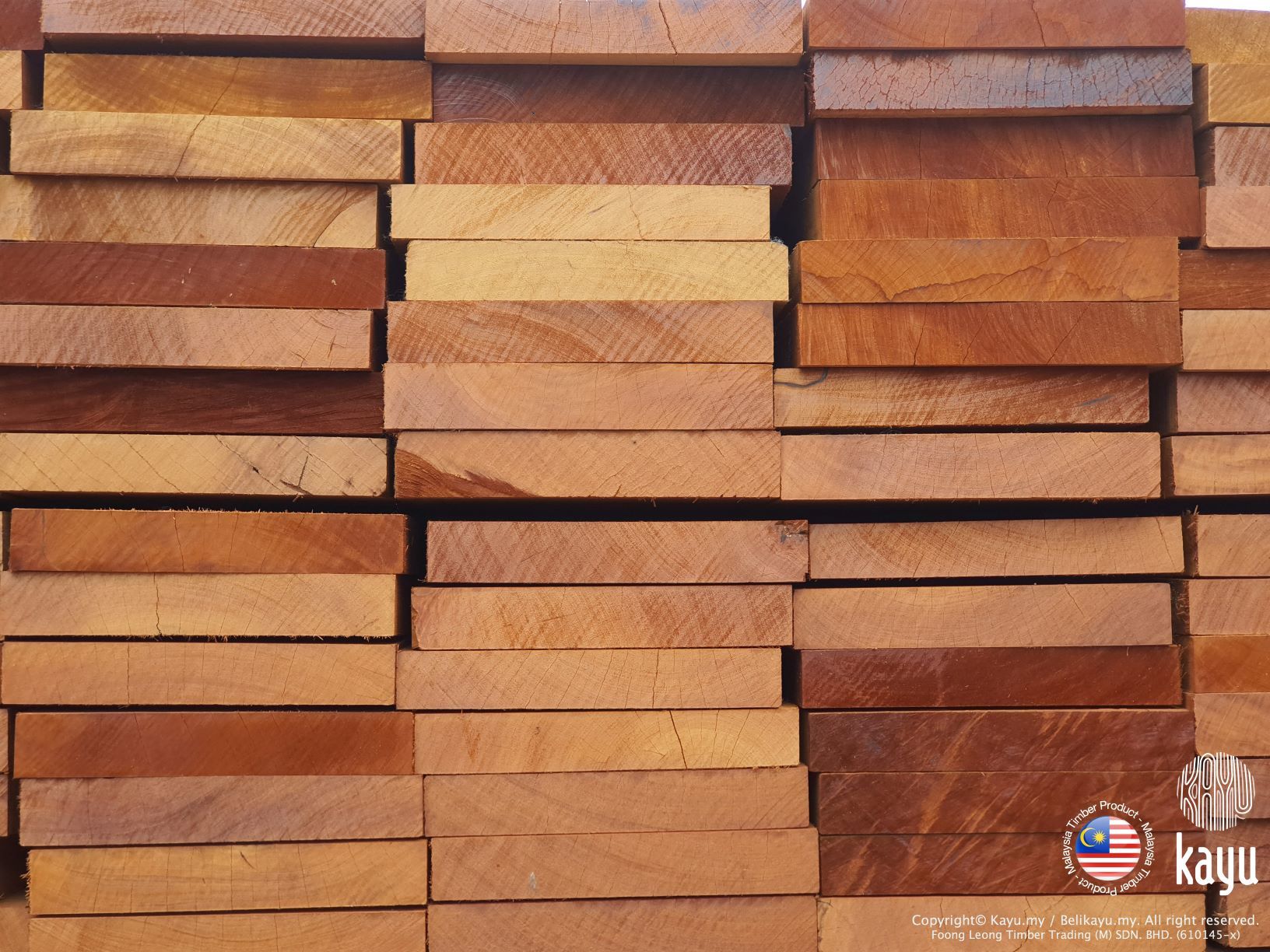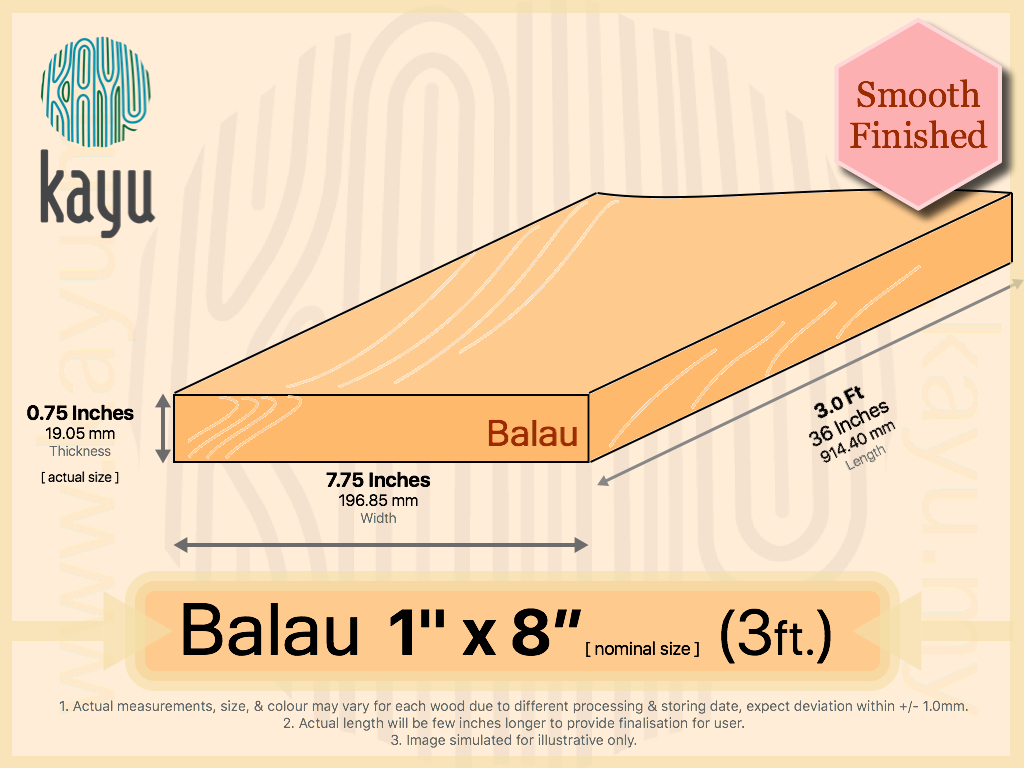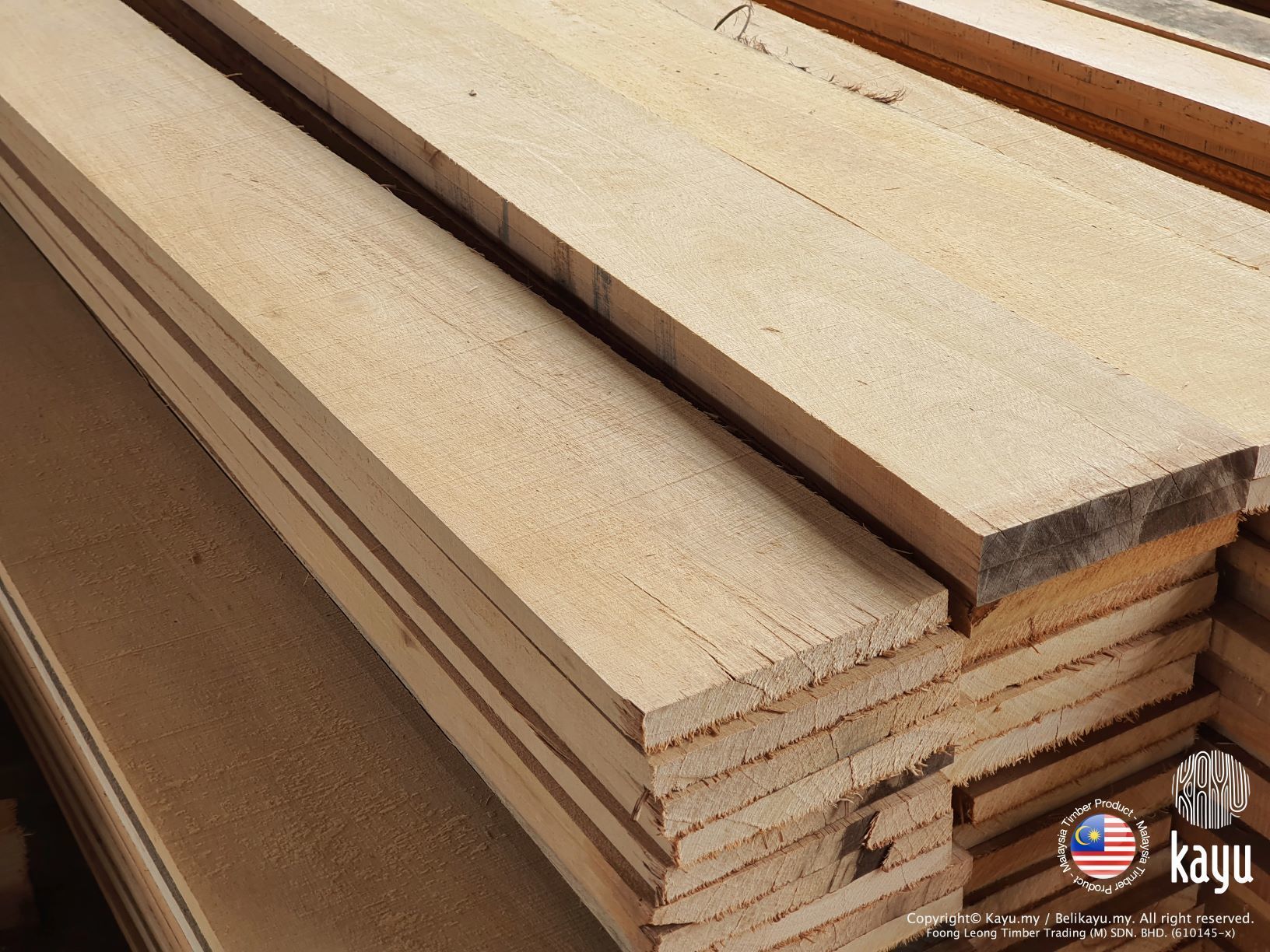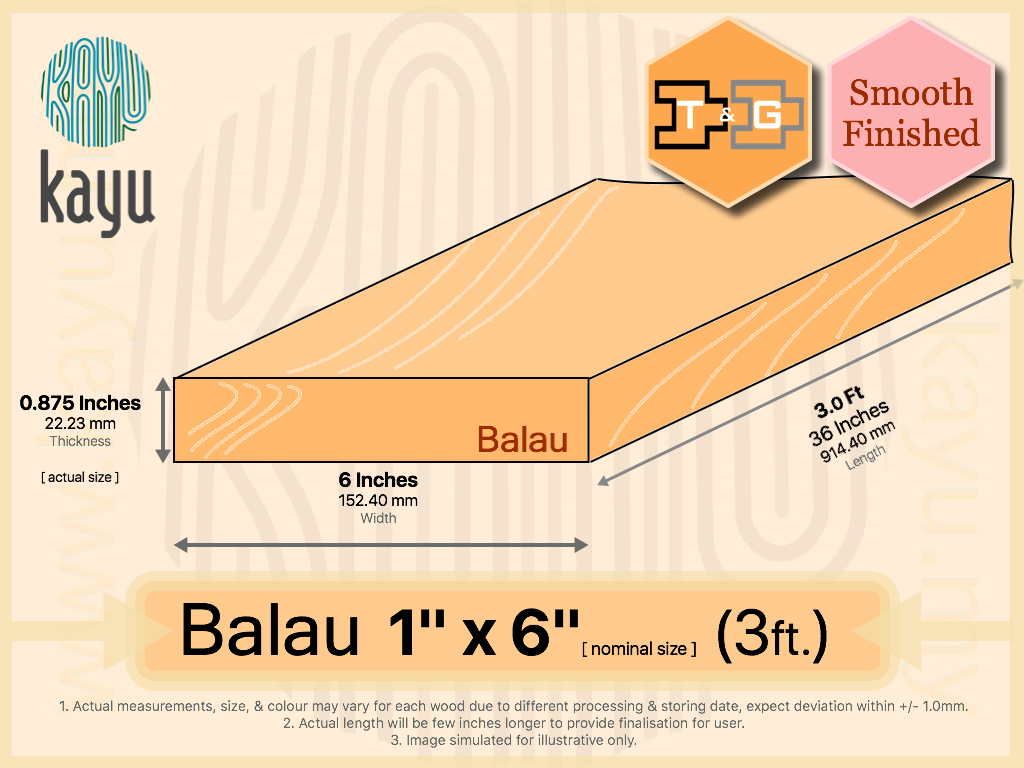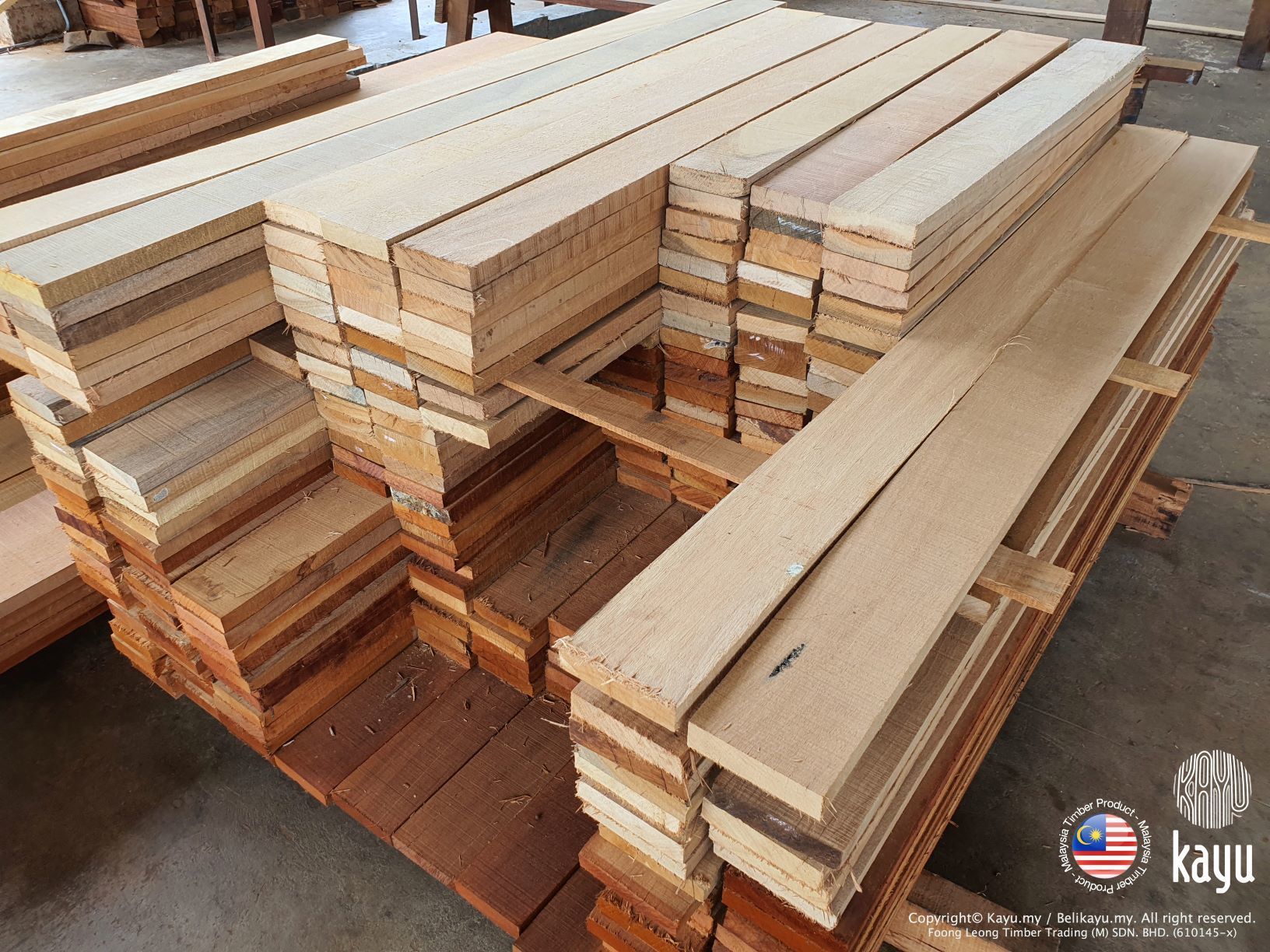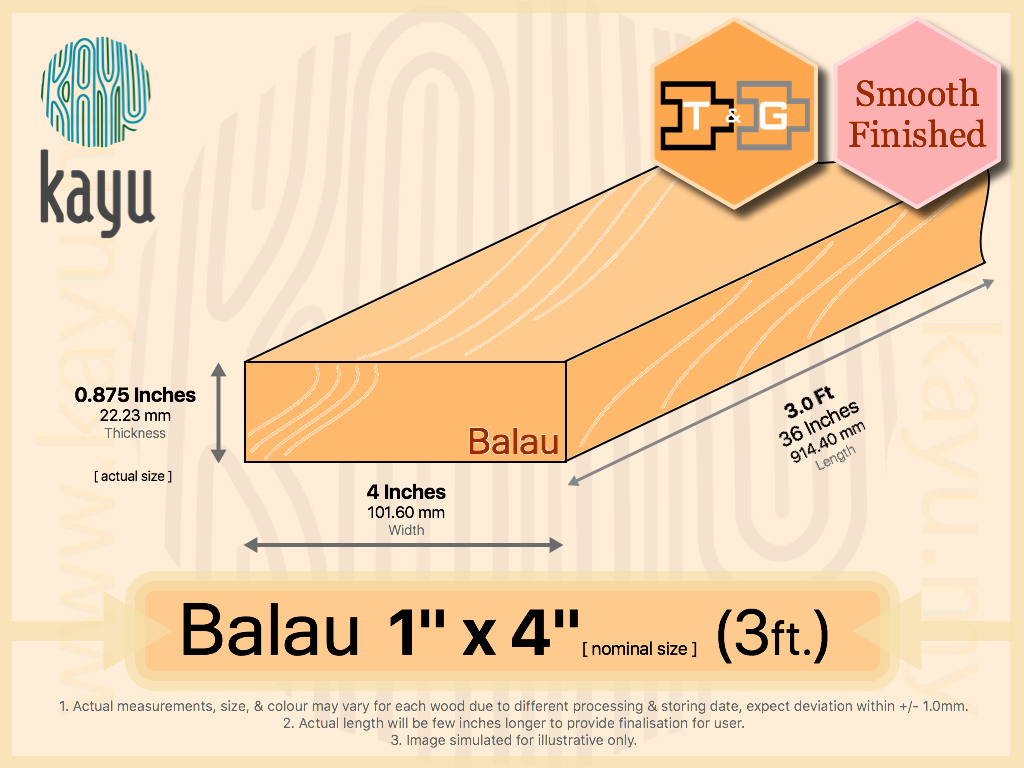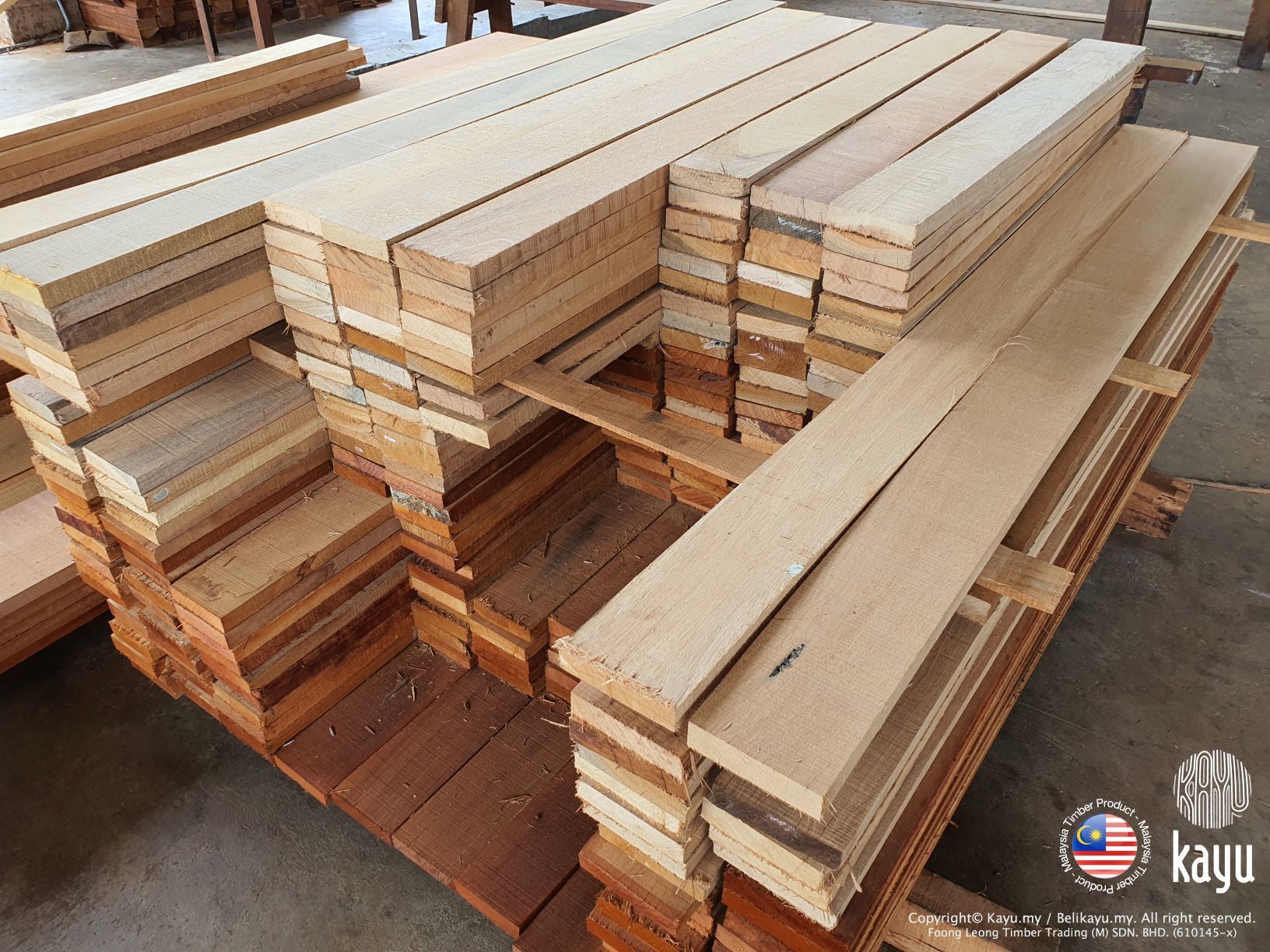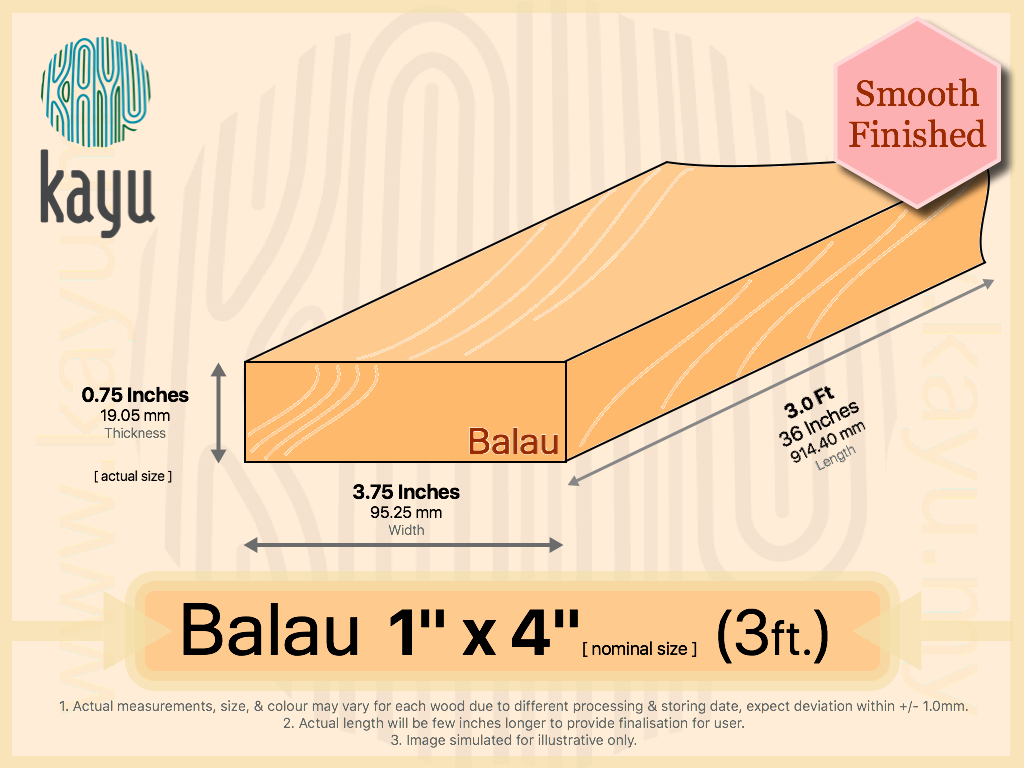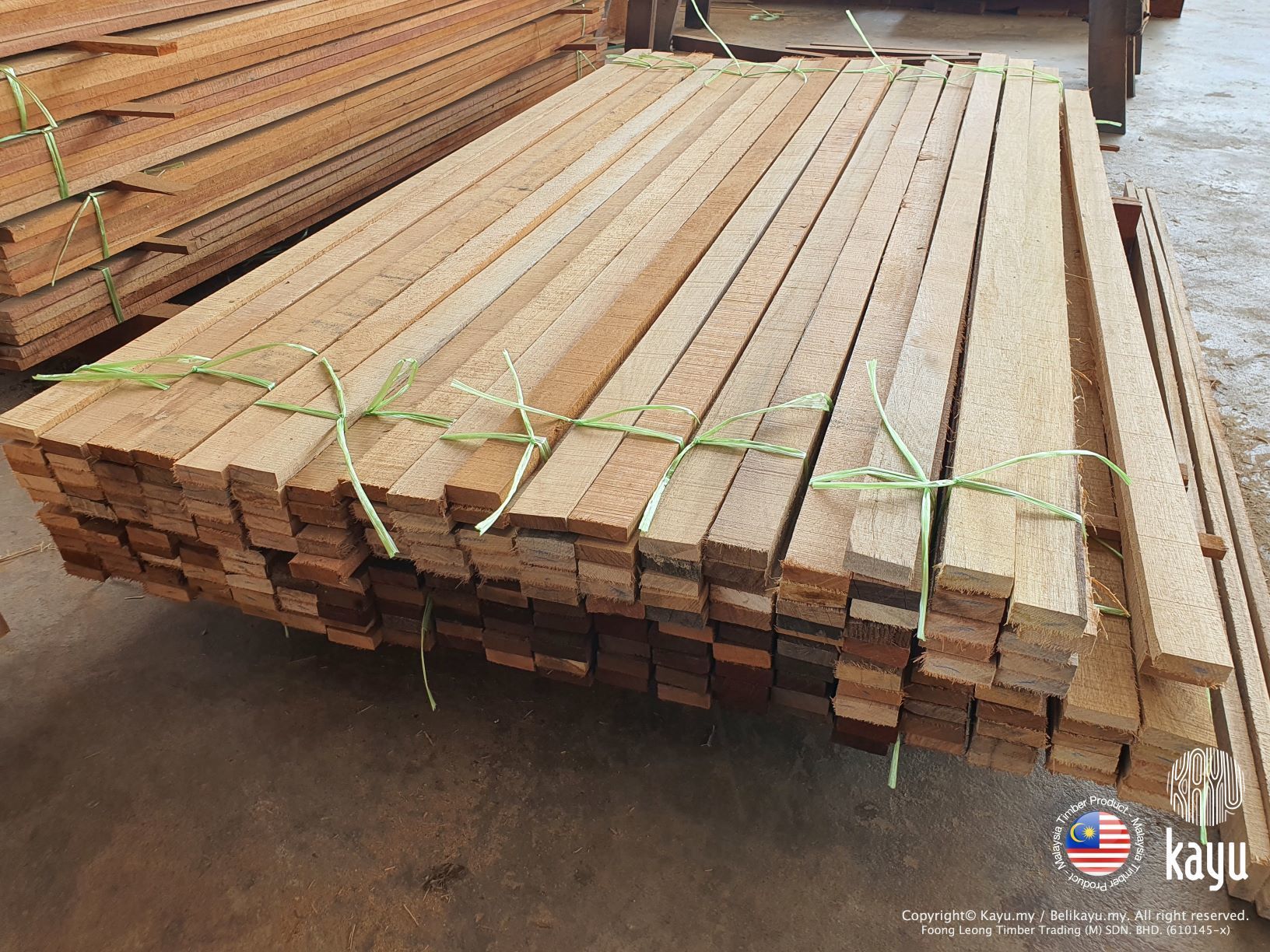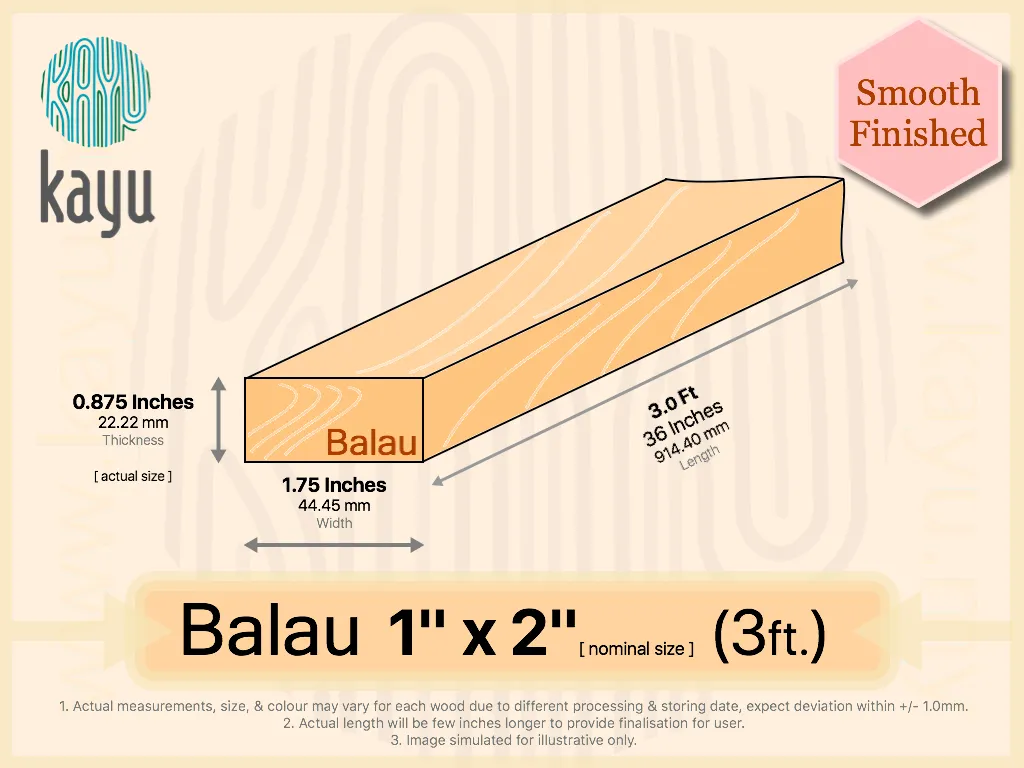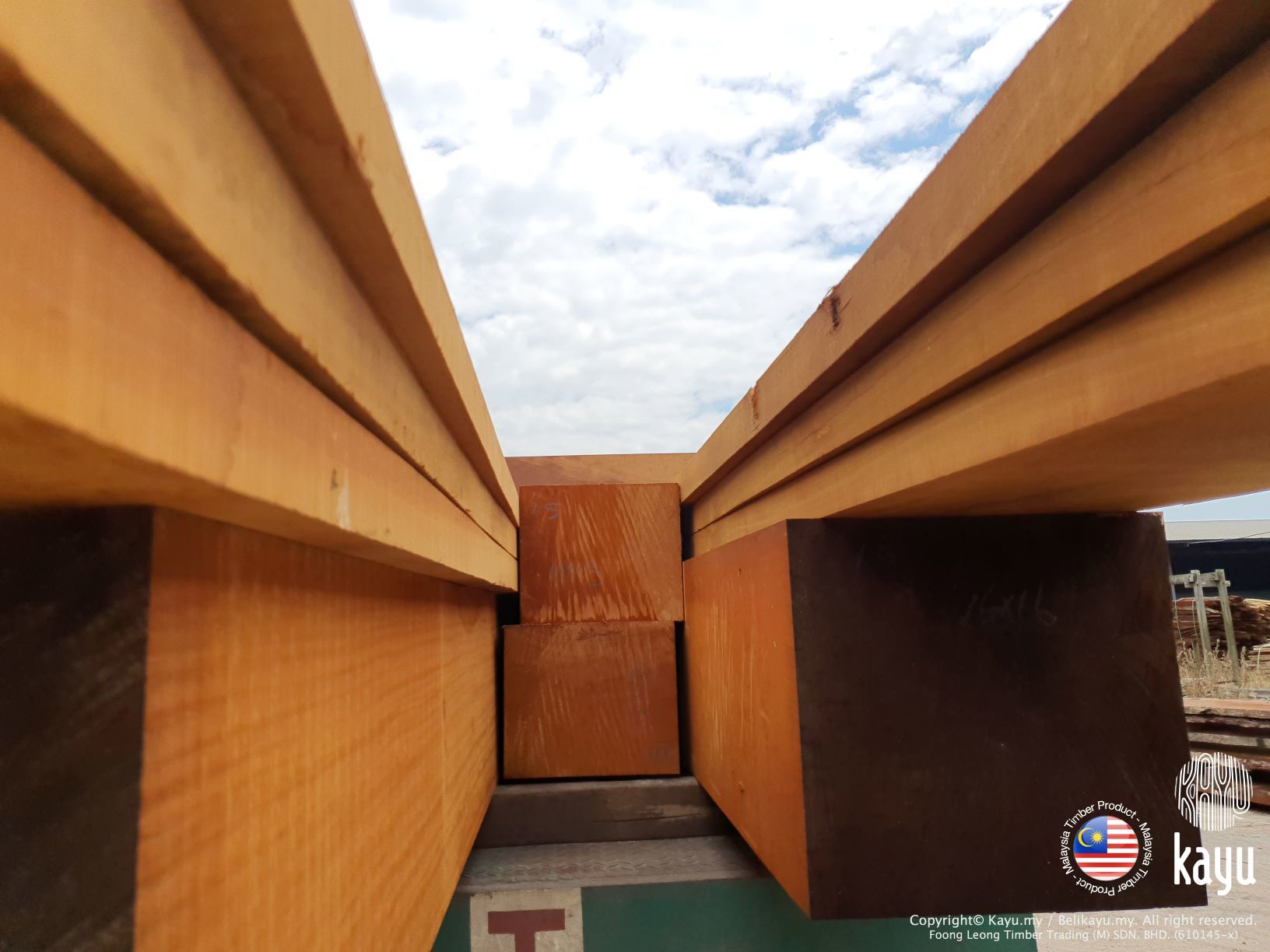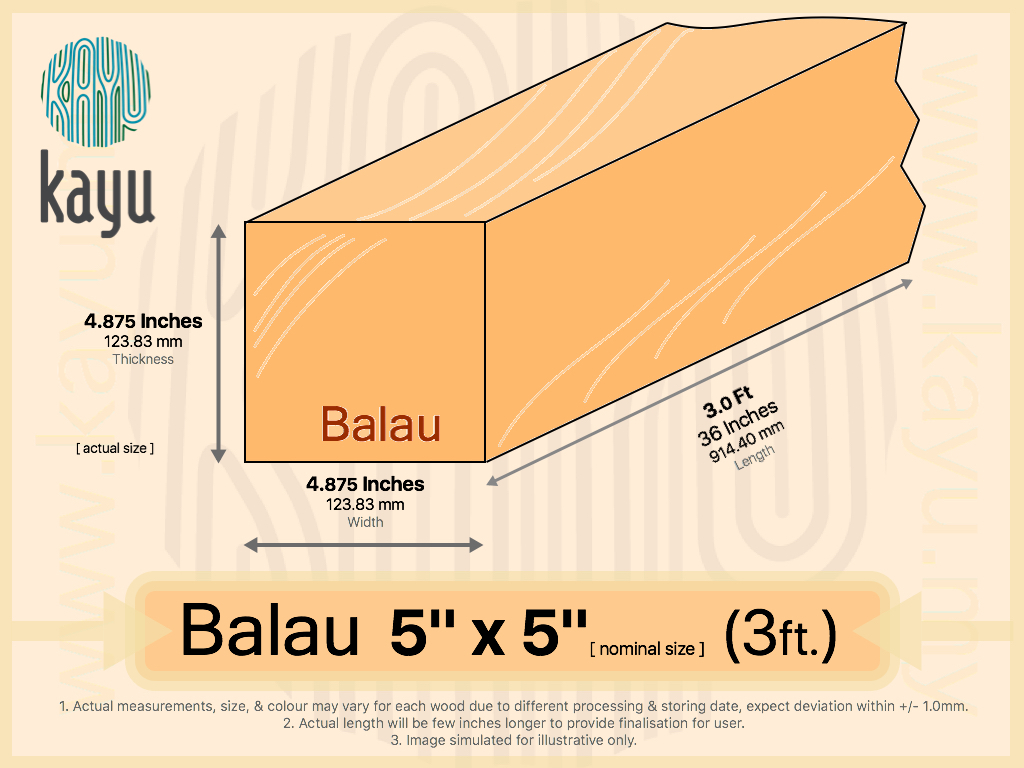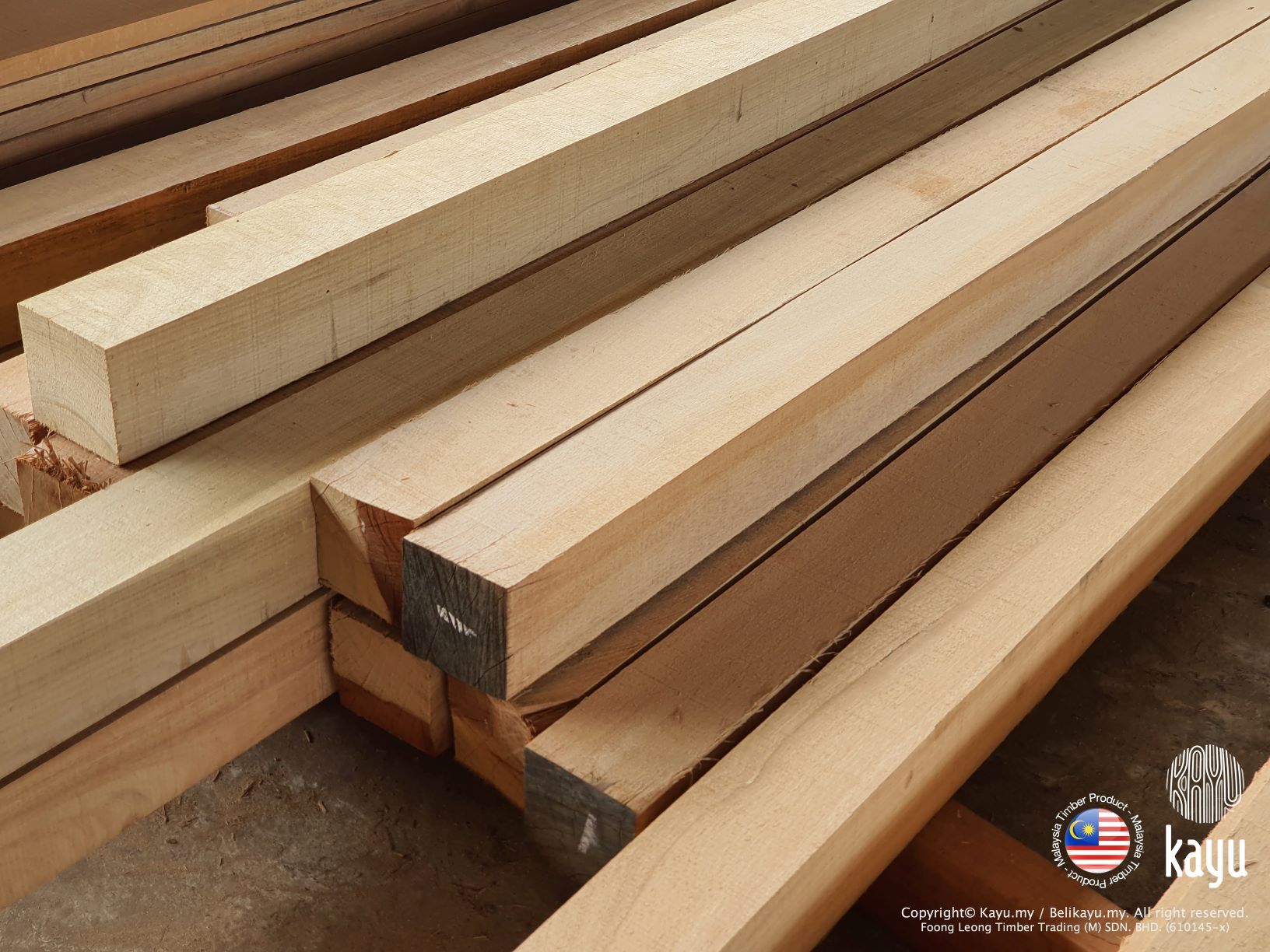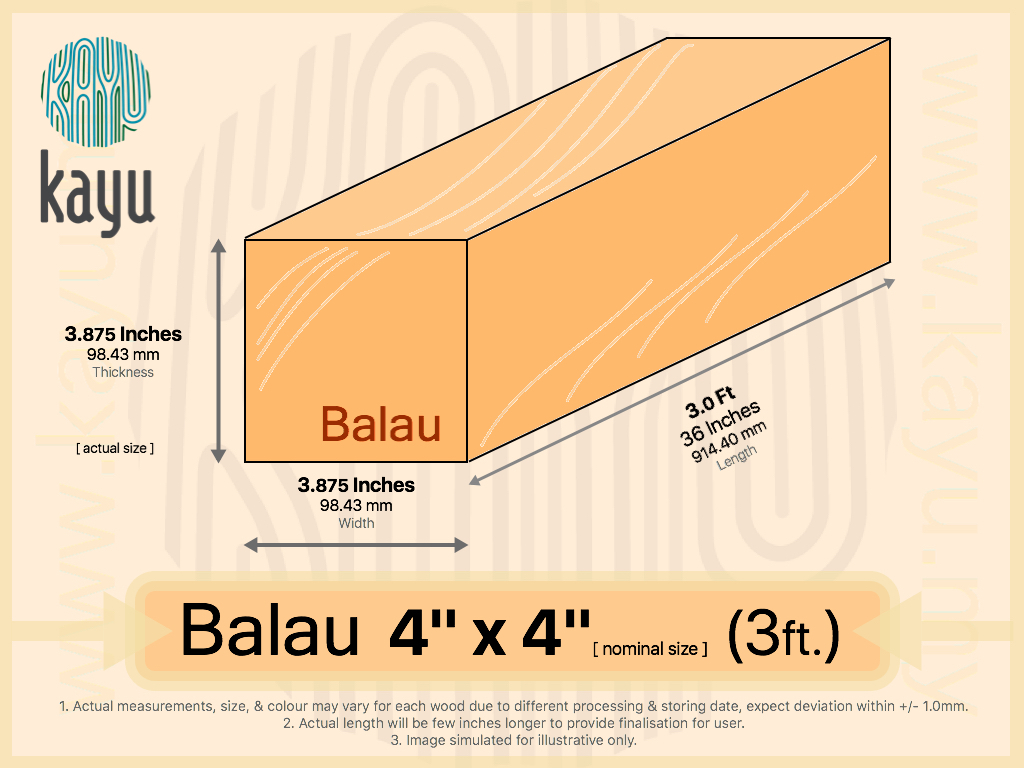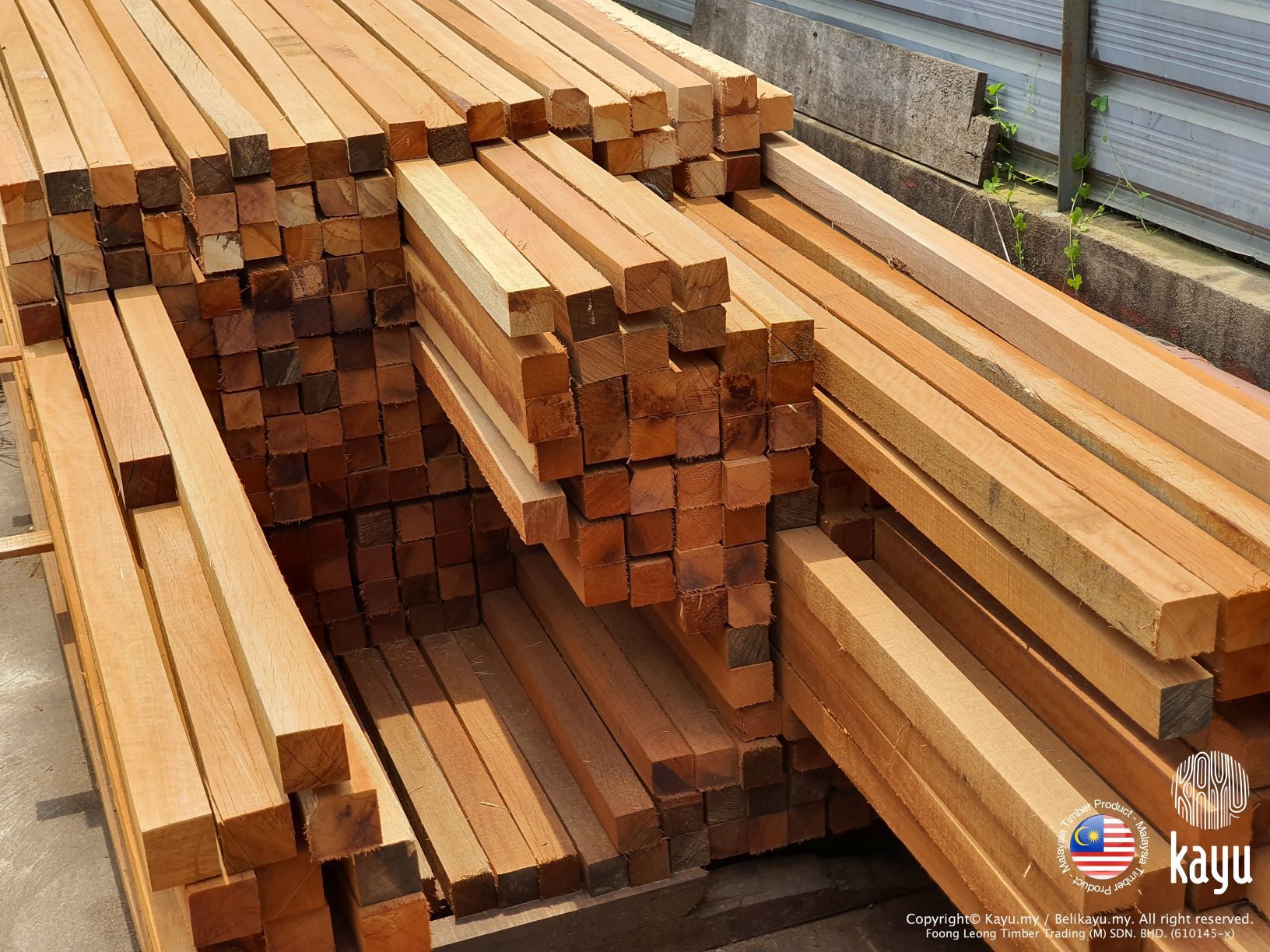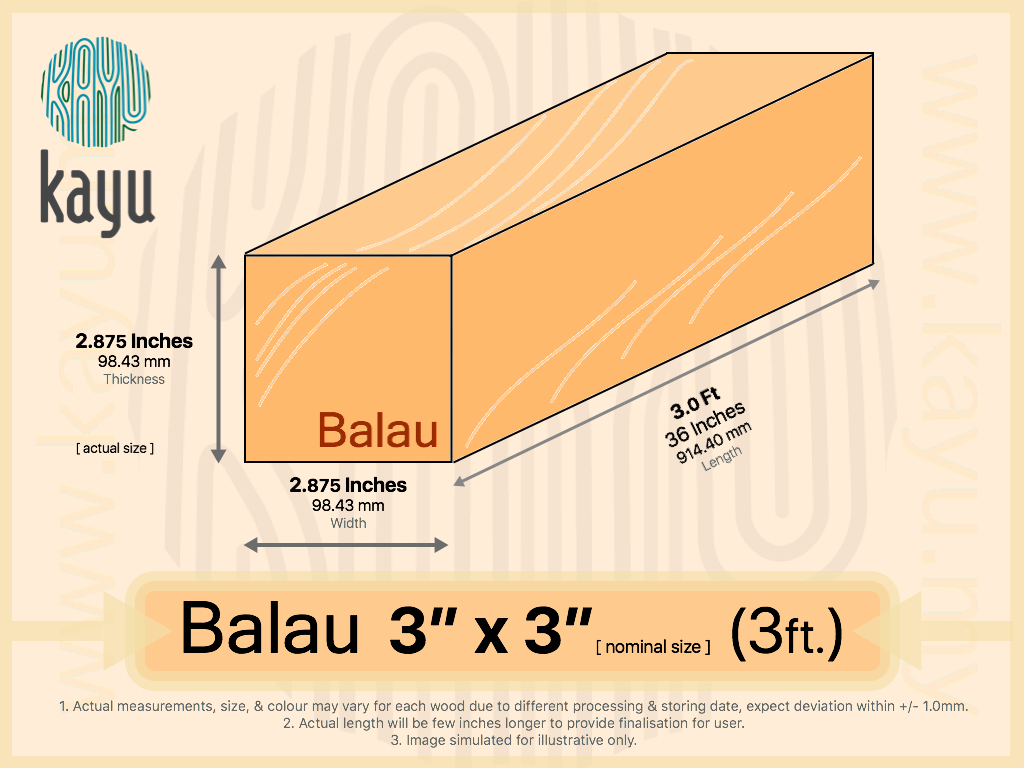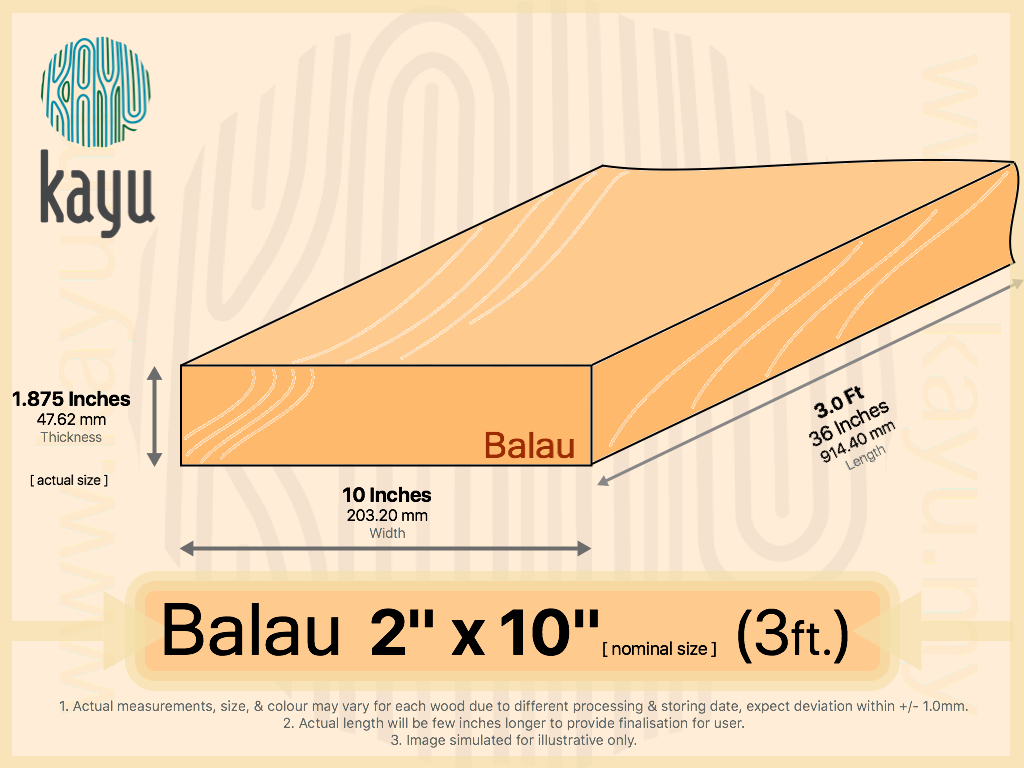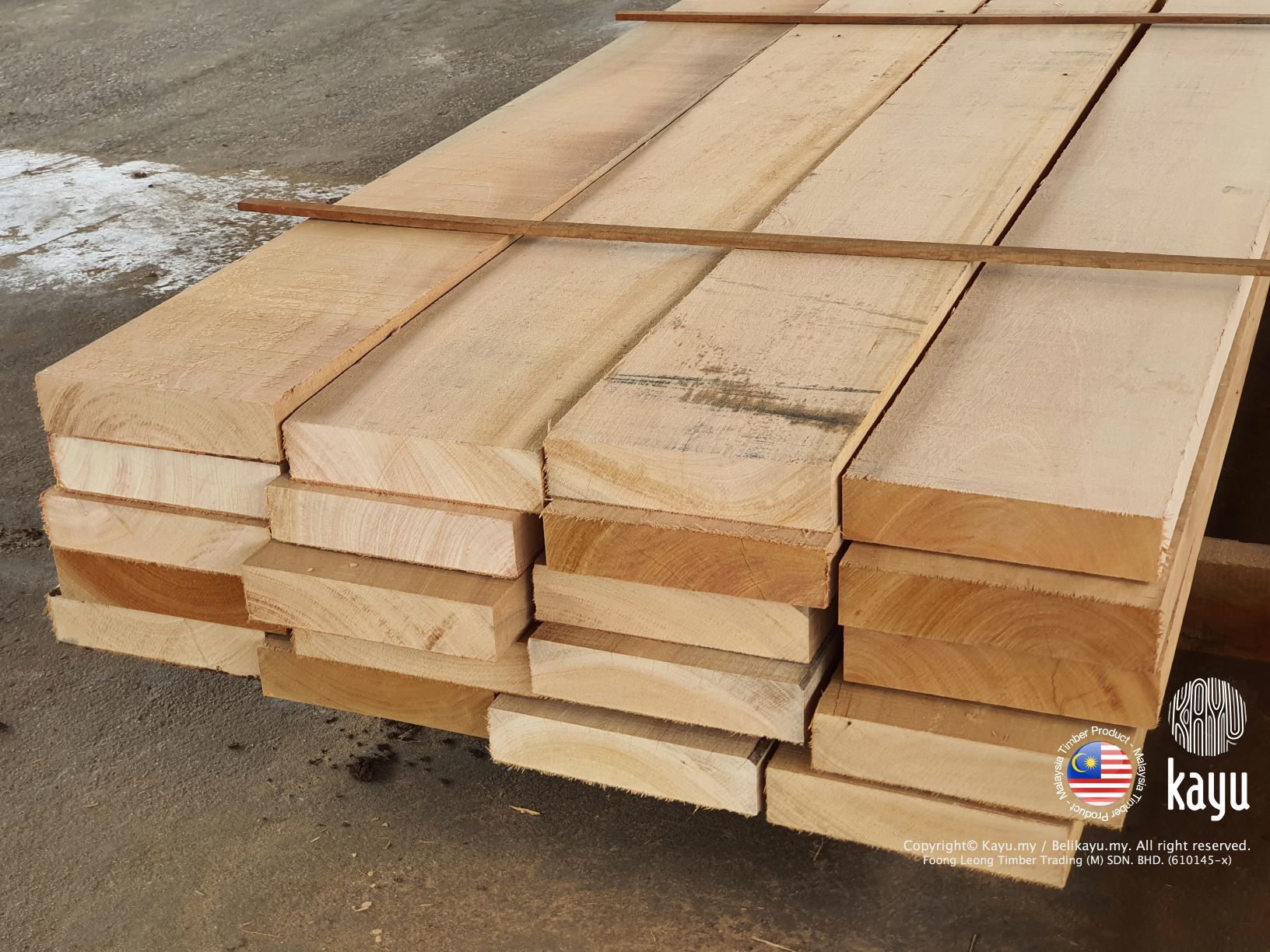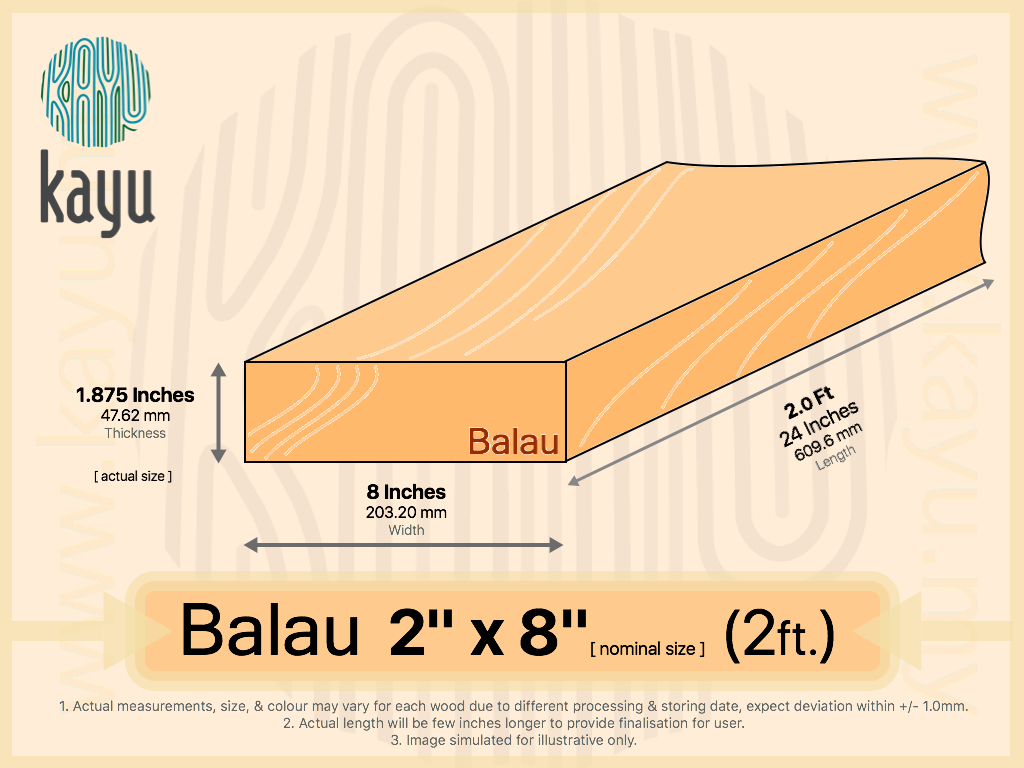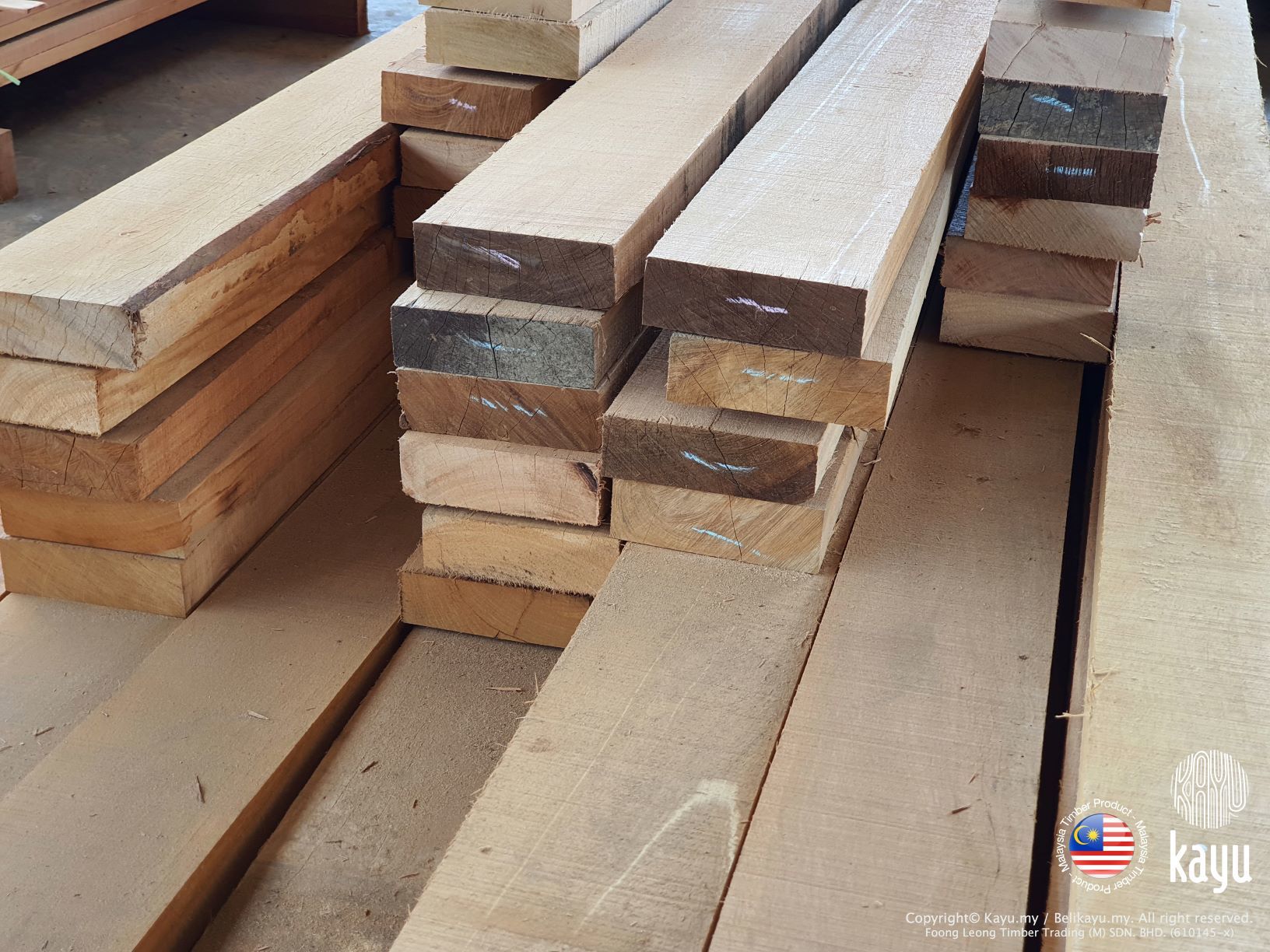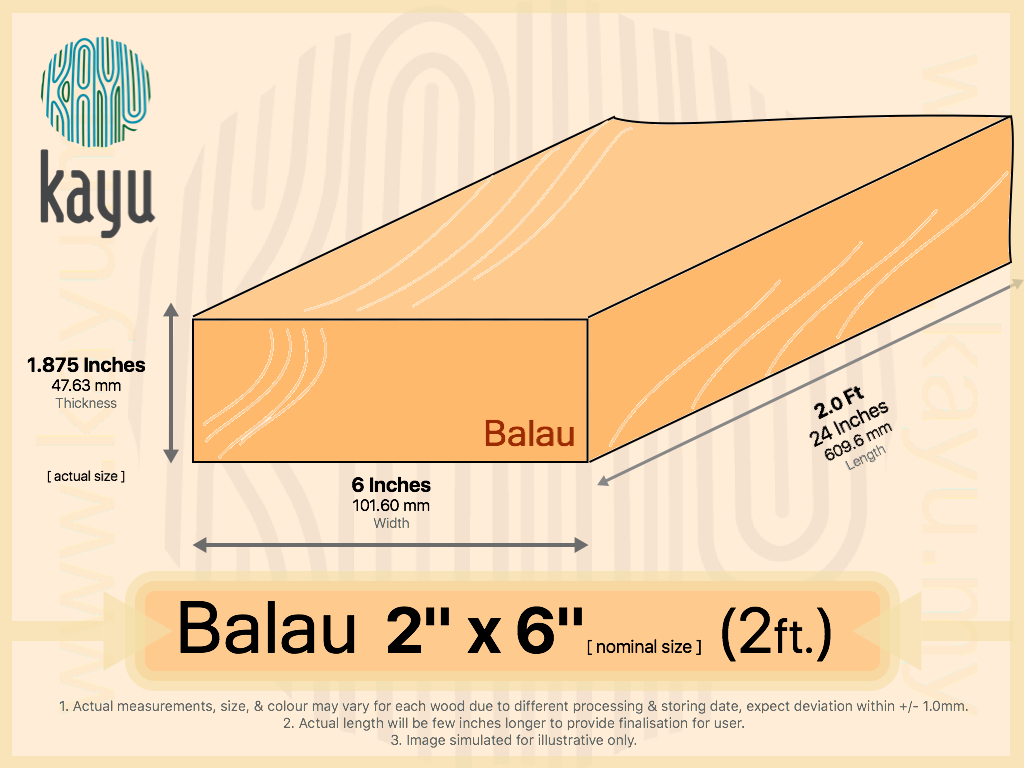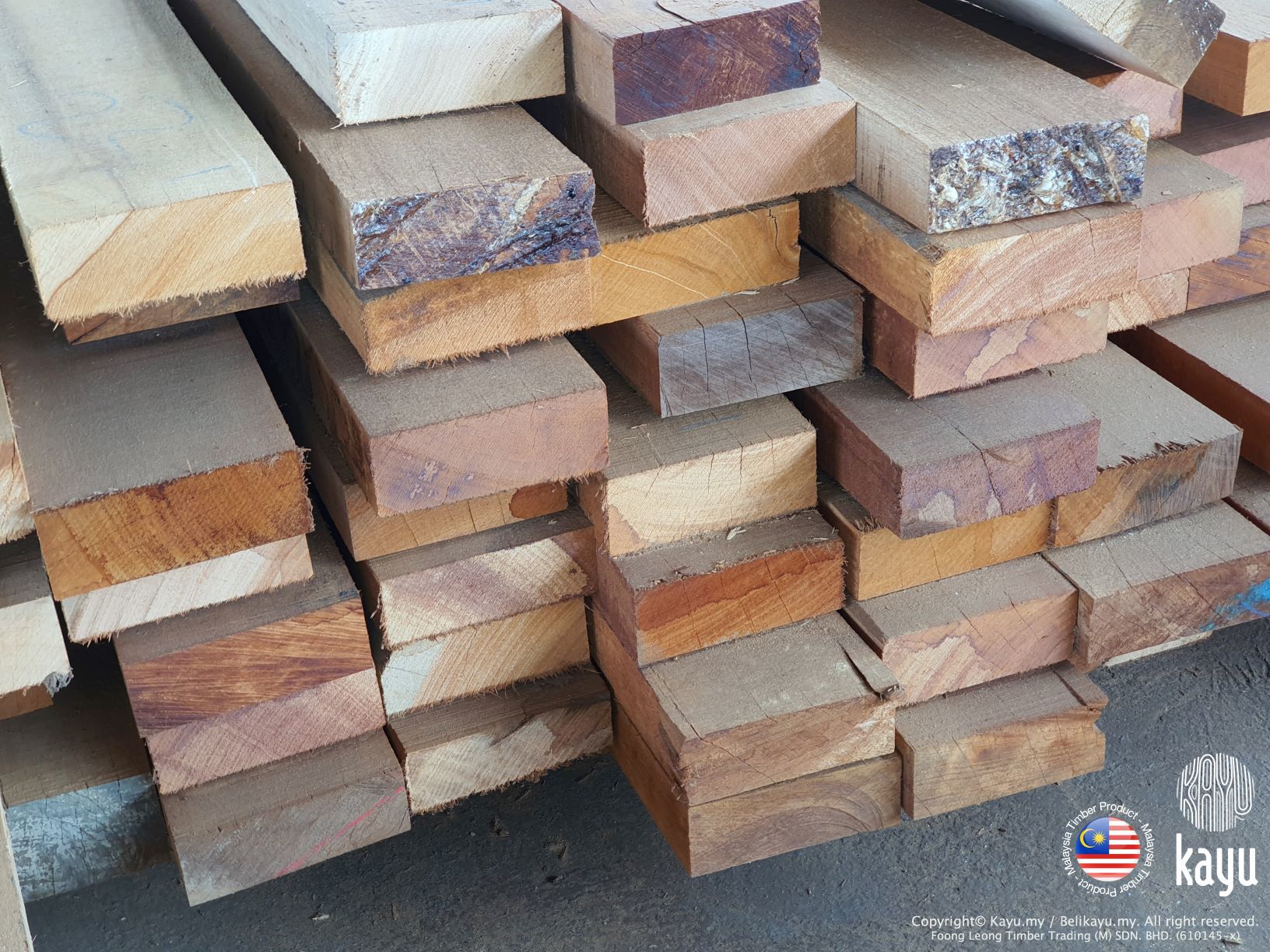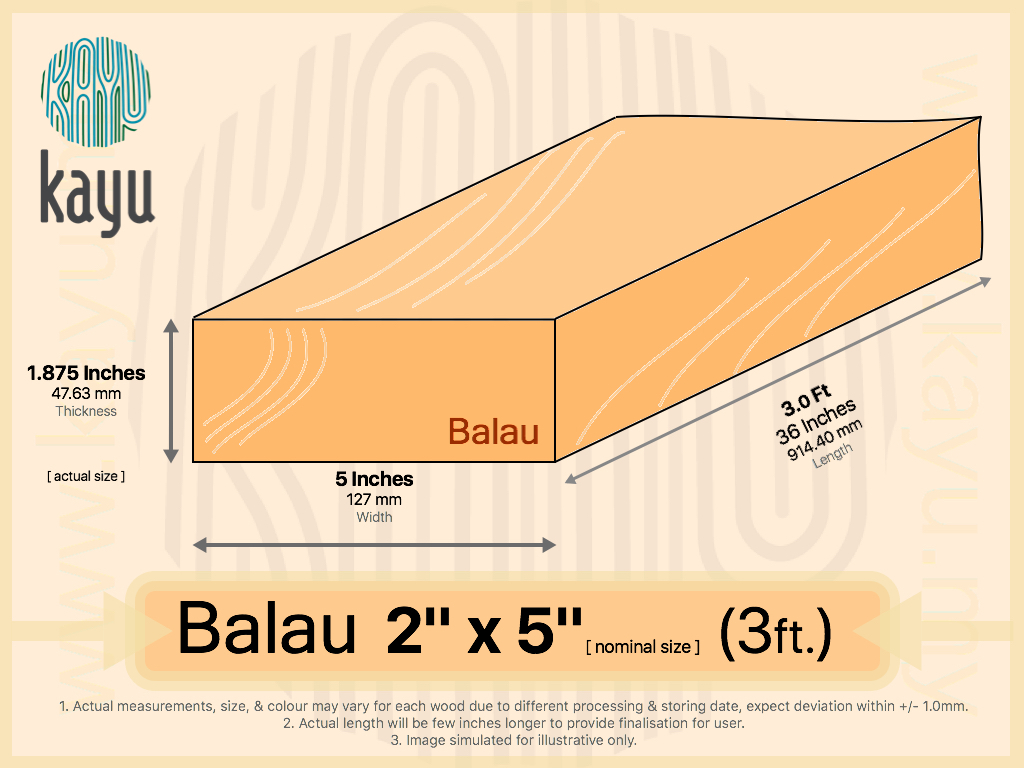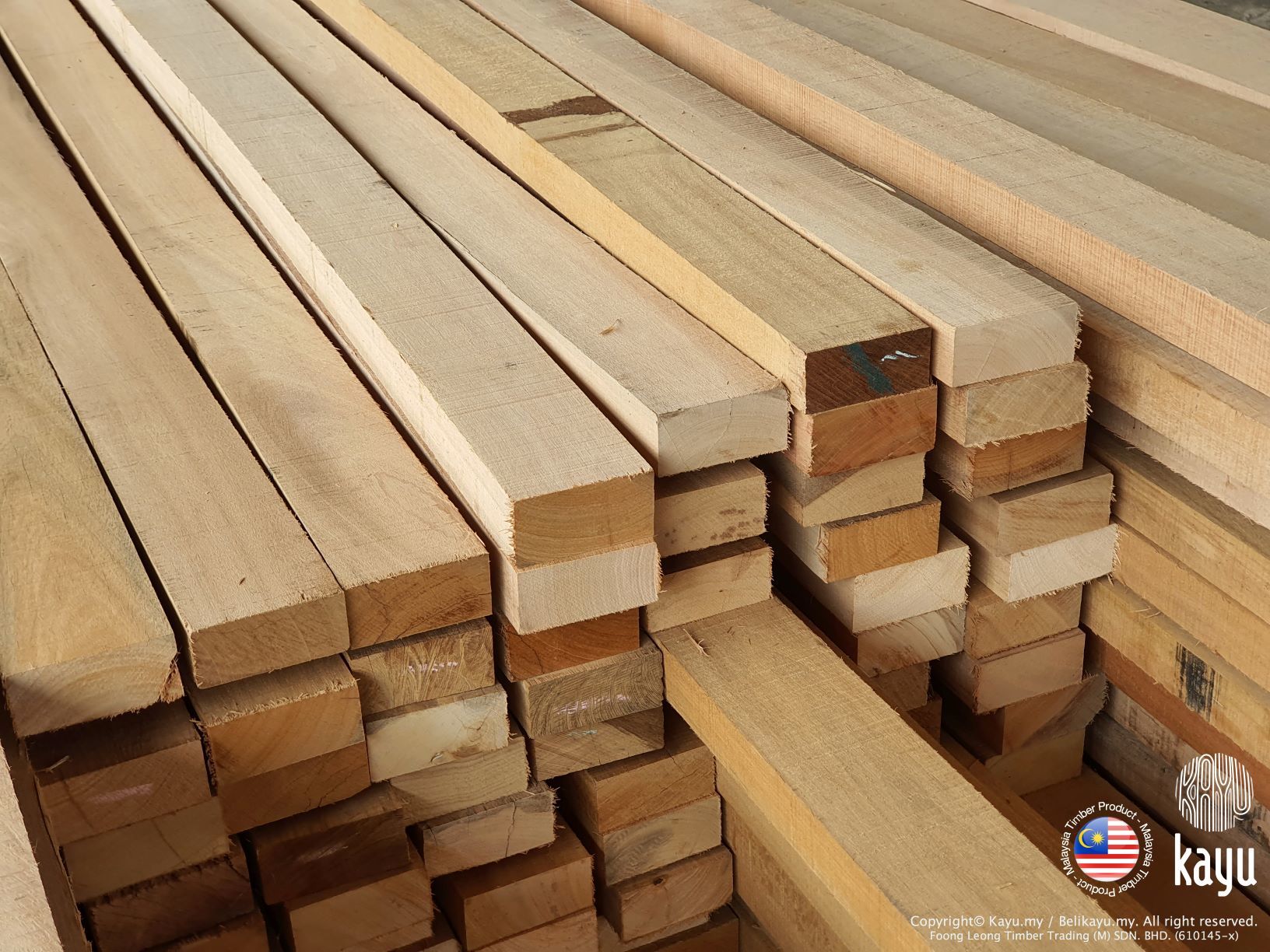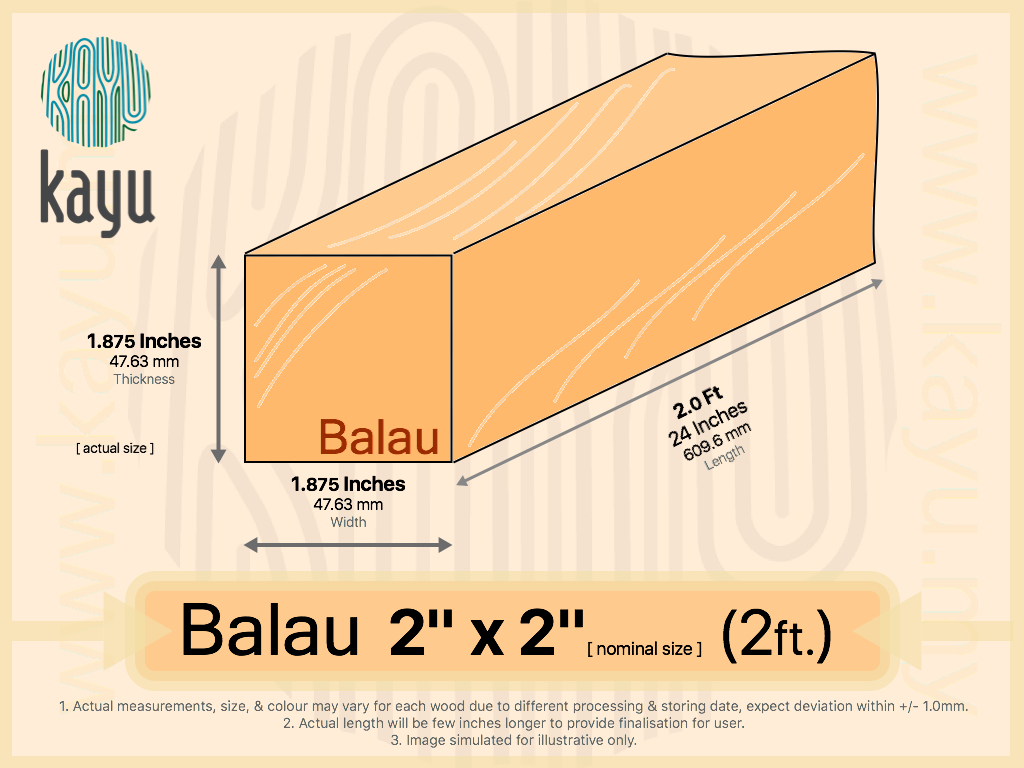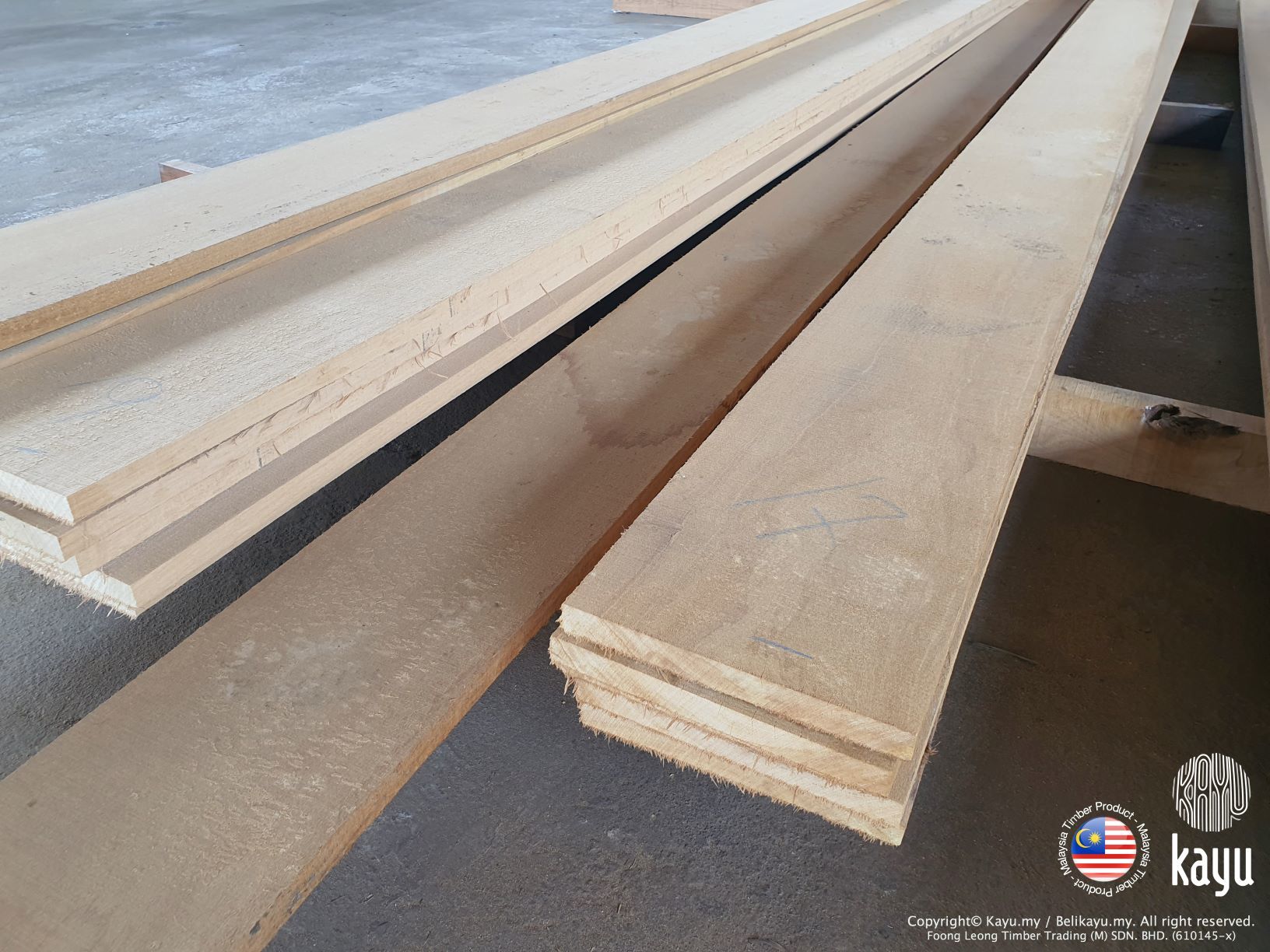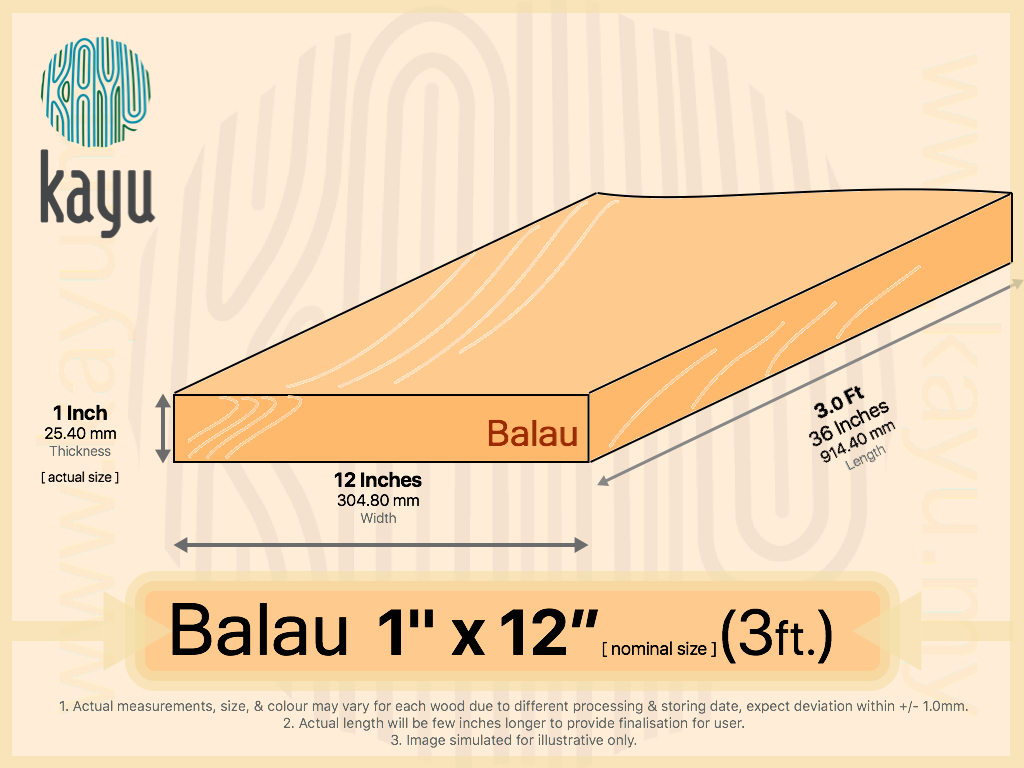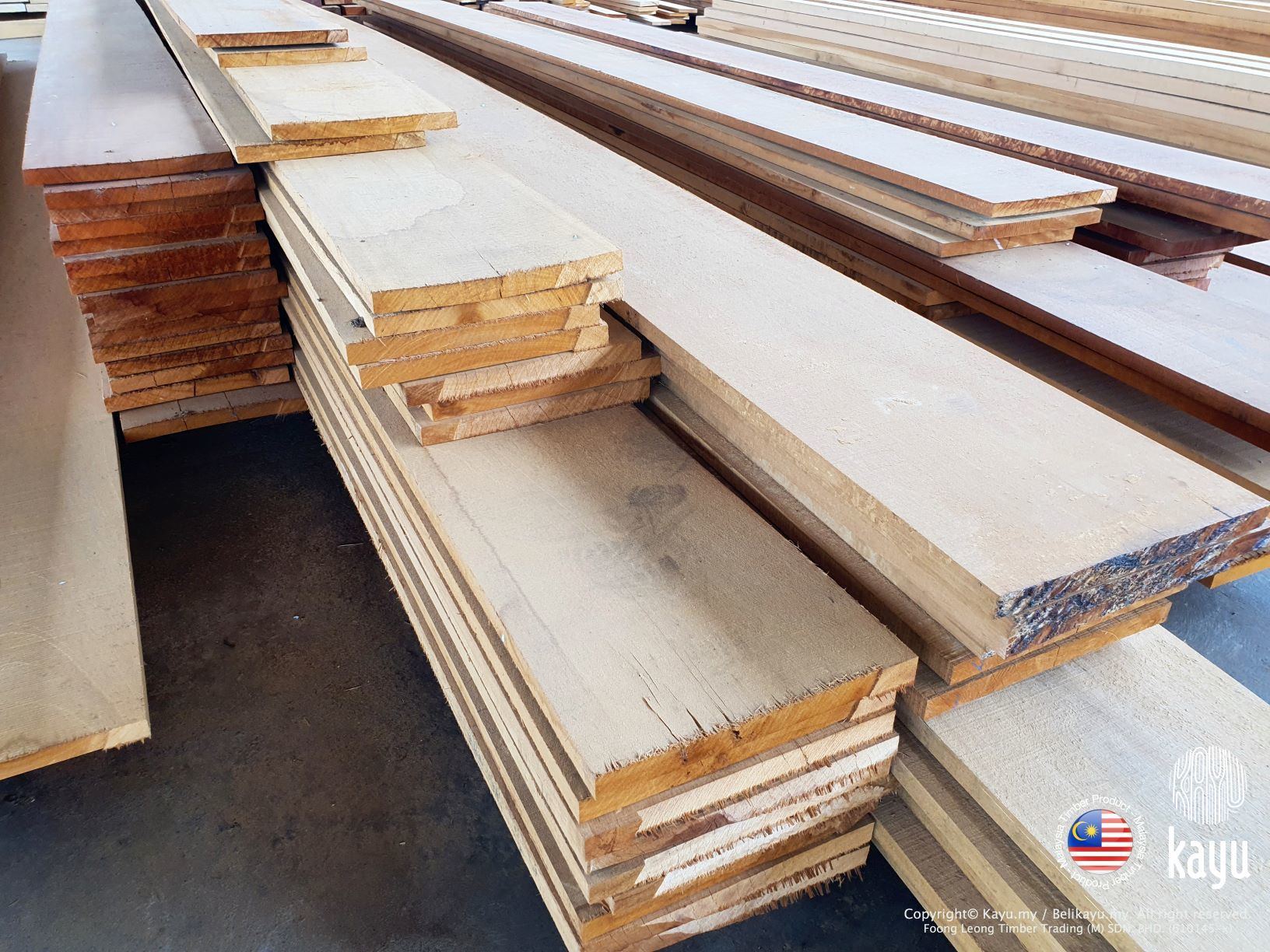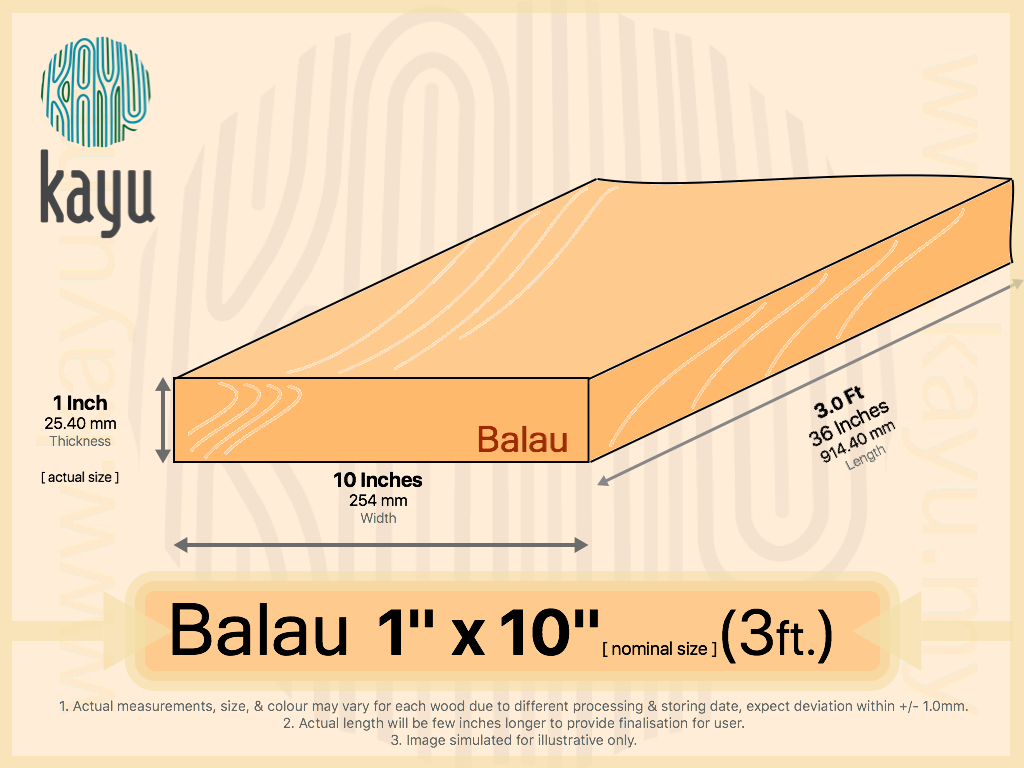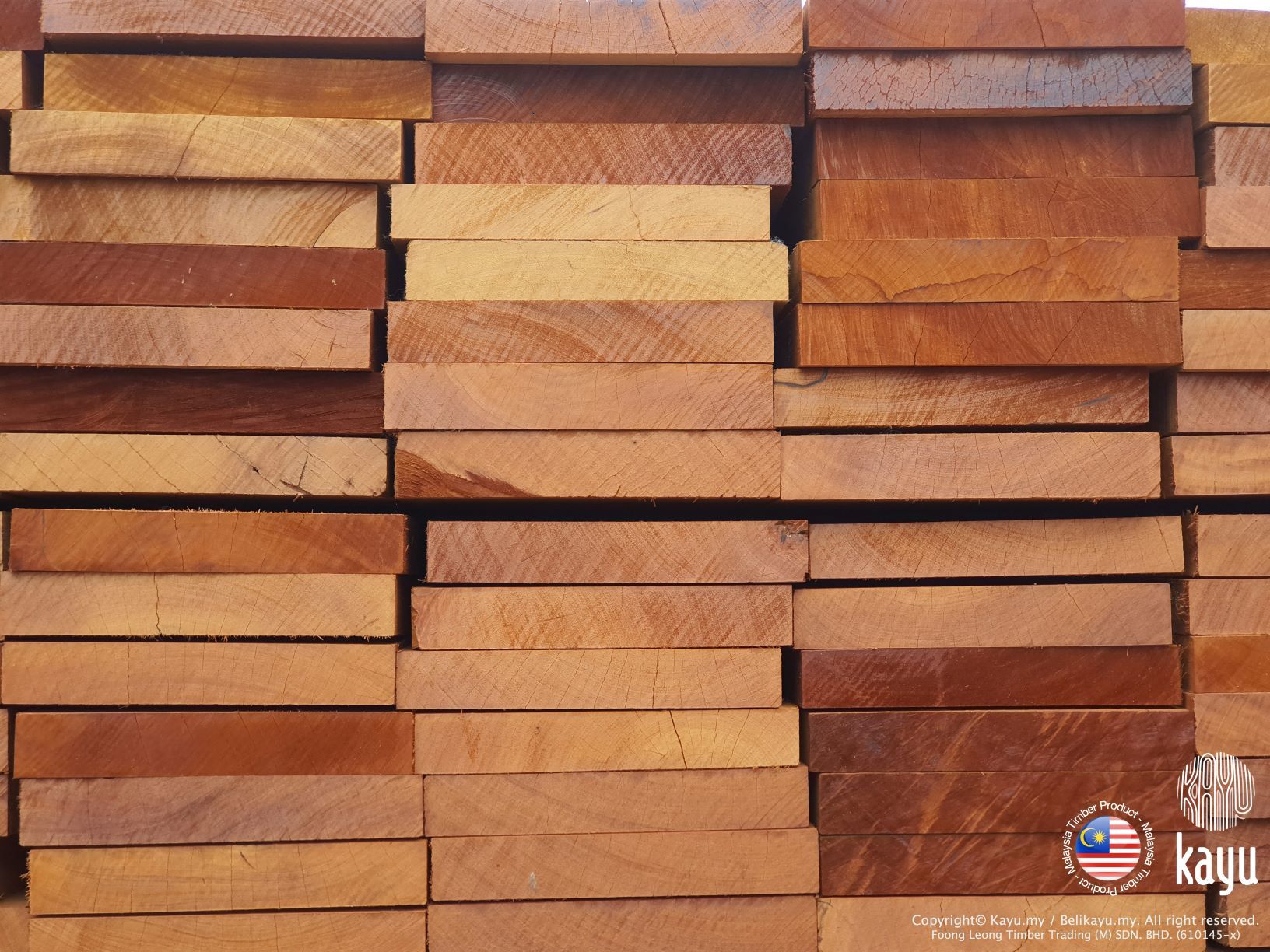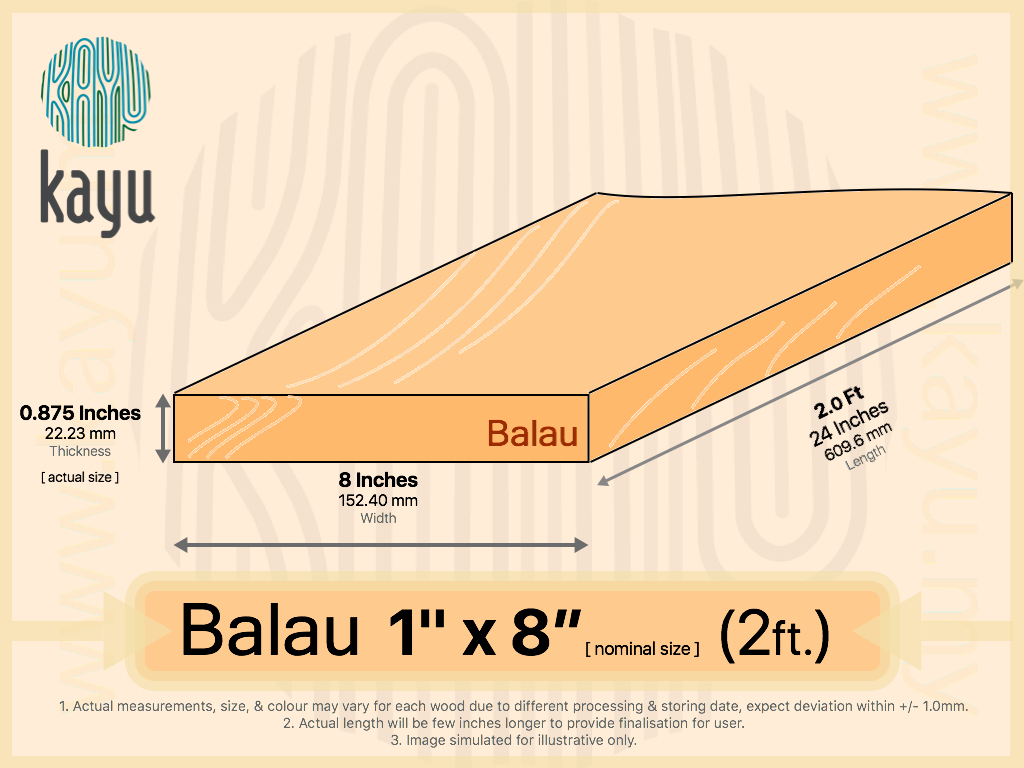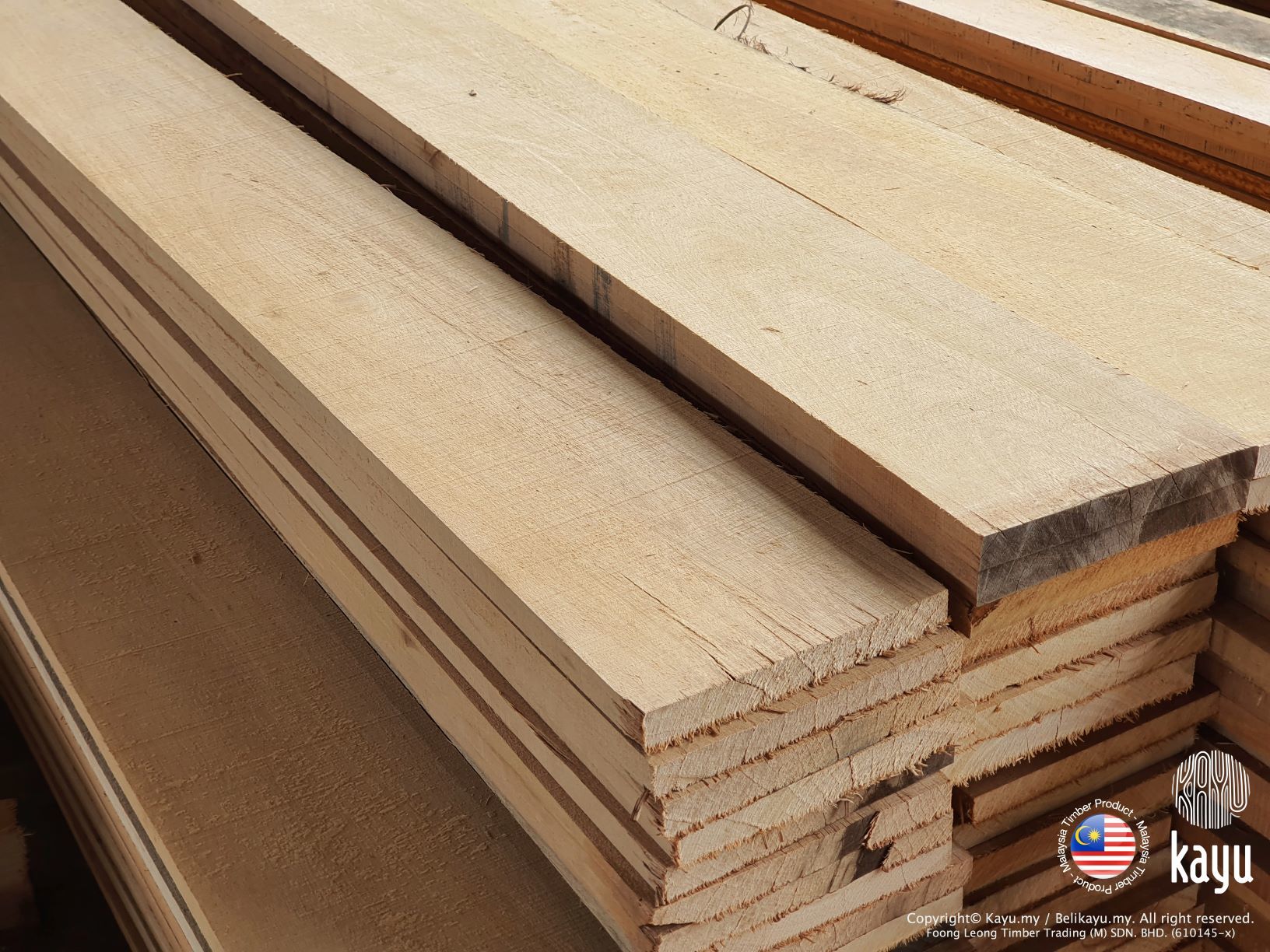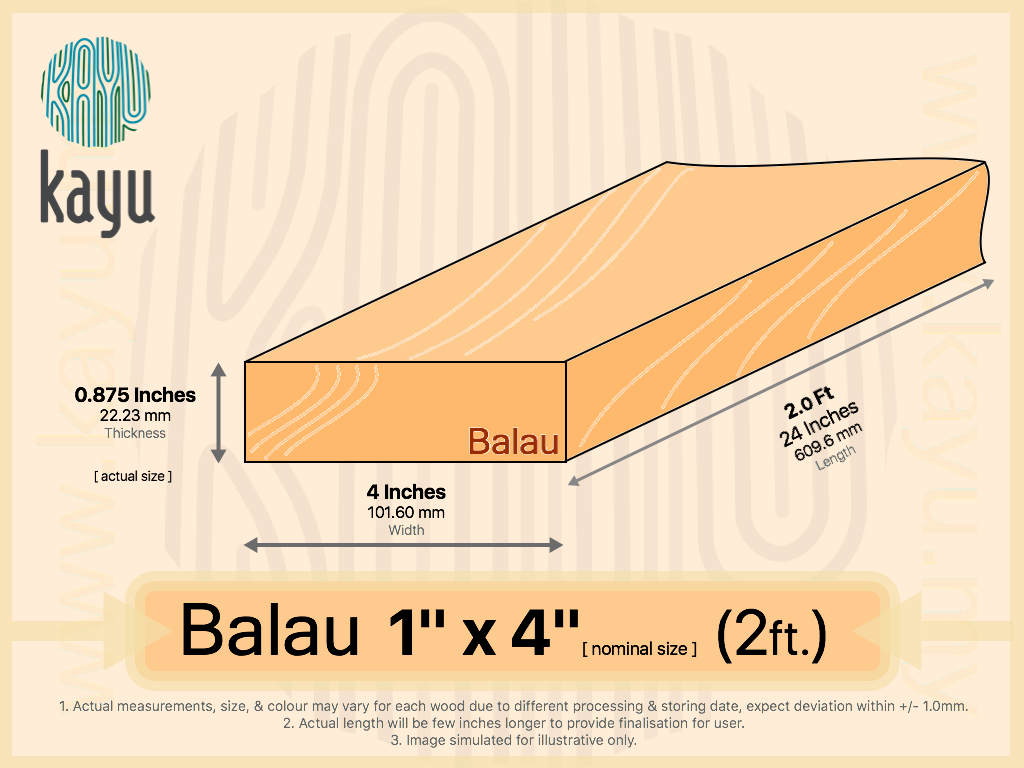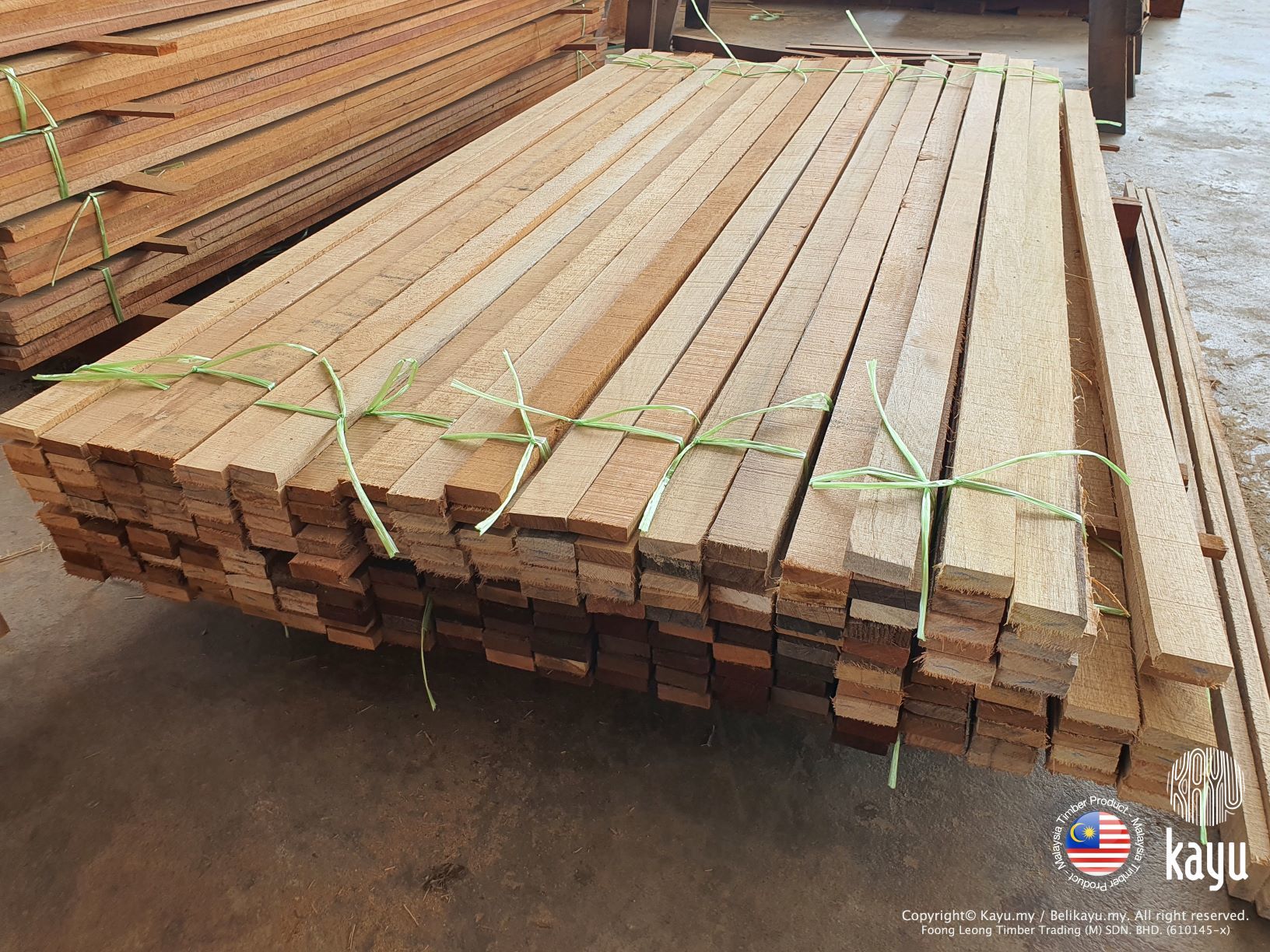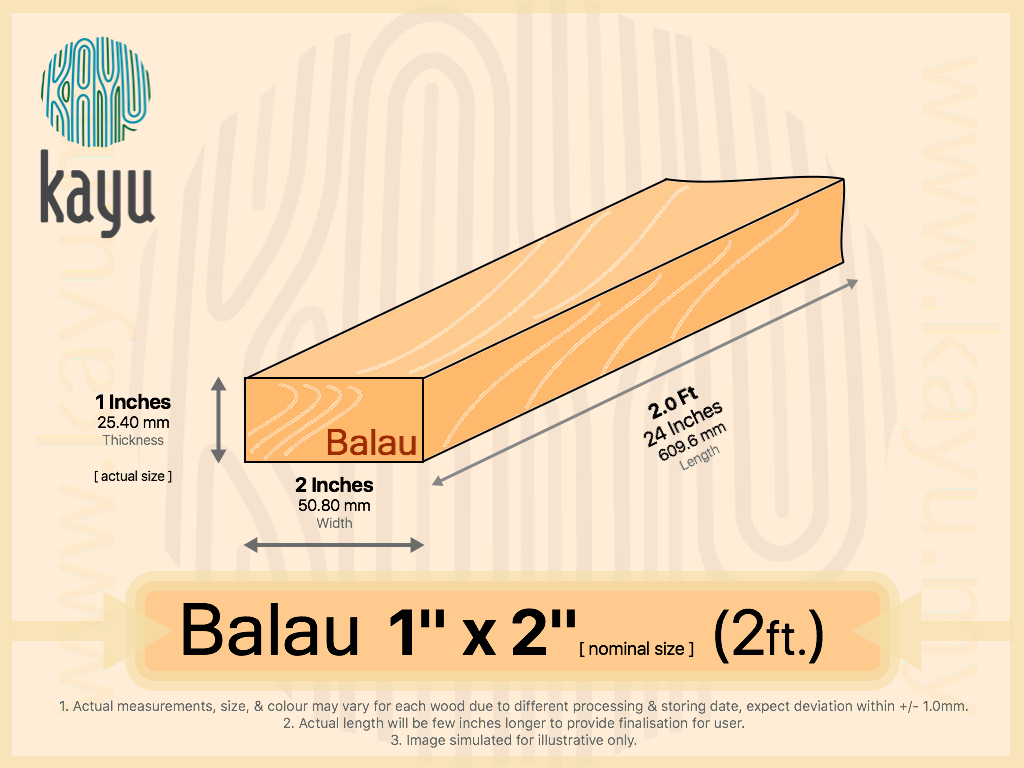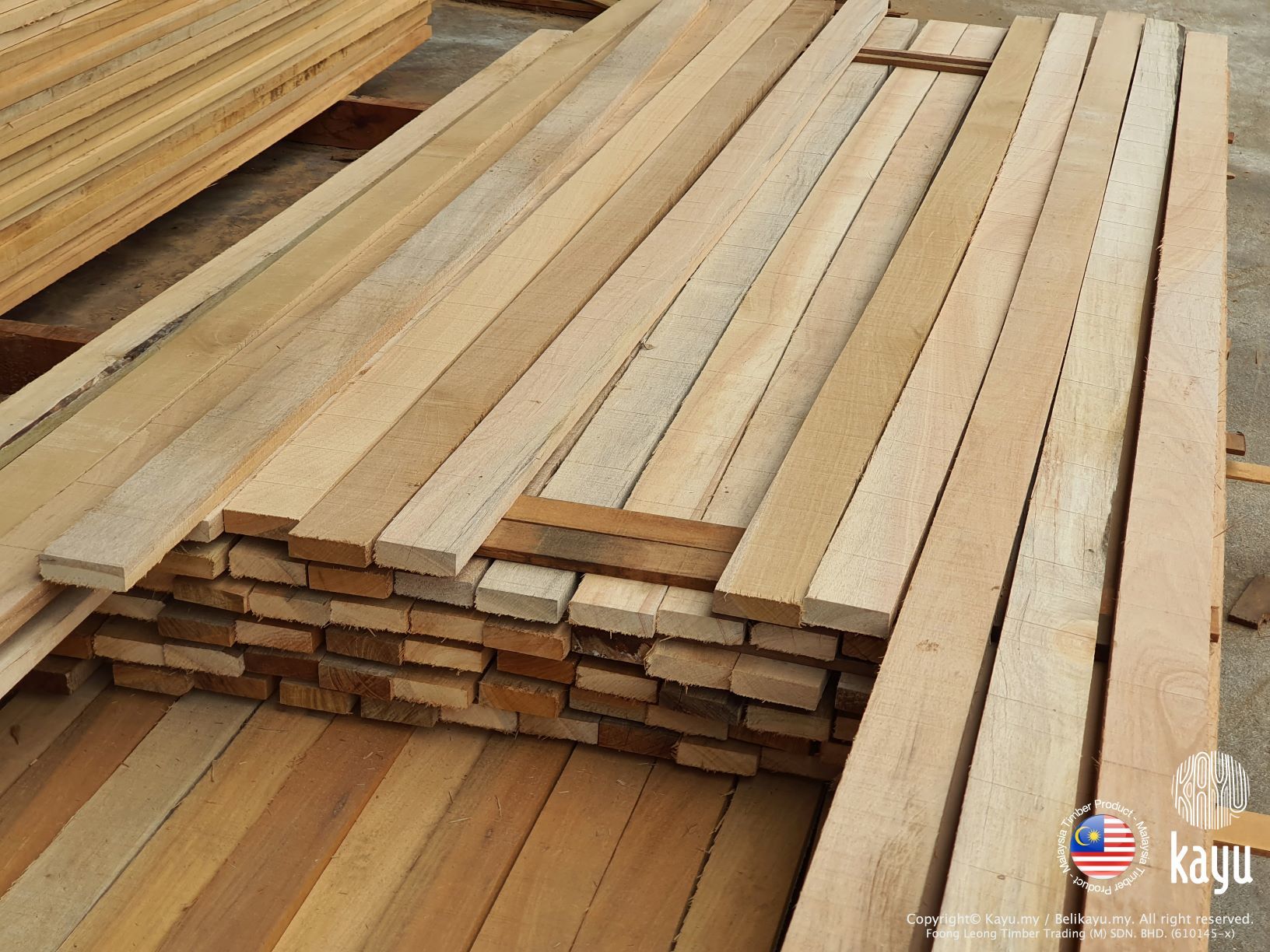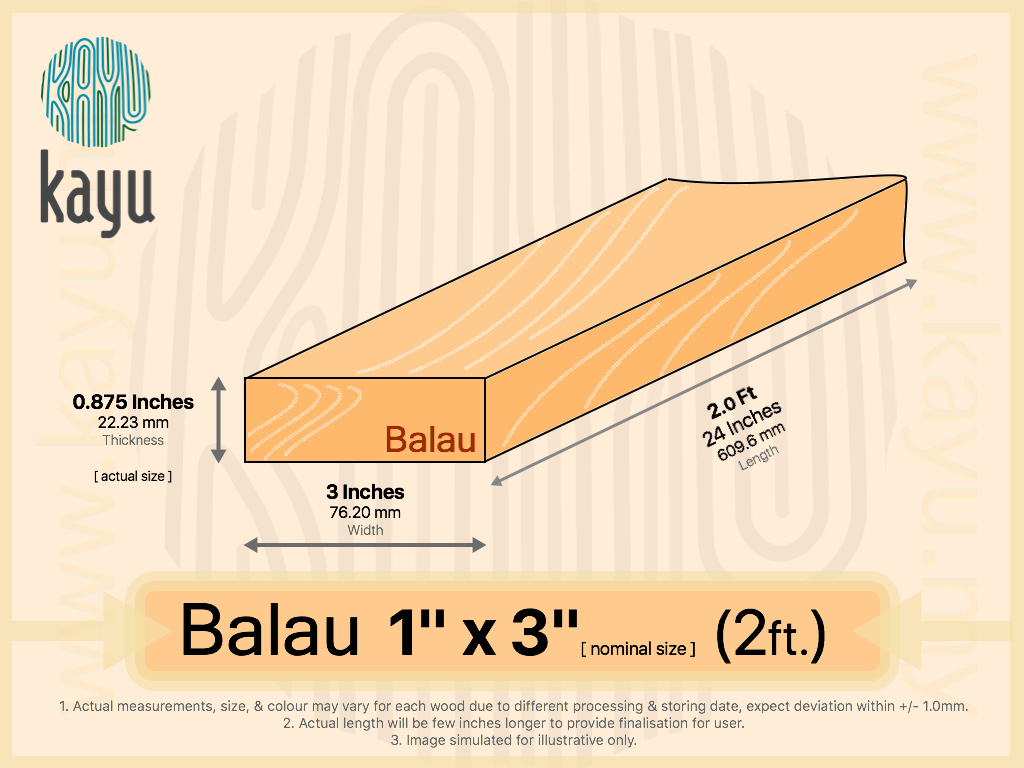


The Standard Malaysian Name for the heavy, yellow to brown timbers of the genus Shorea (Dipterocarpaceae). Vernacular names applied include balau (Peninsular Malaysia) with various epithets, selangan batu No. 1 (Sabah), selangan batu (Sabah and Sarawak) and other localised names too numerous to be listed here. Major species include S. atrinervosa, S. foxworthyi, S. glauca, S. laevis, S. materialis, S. maxwelliana, S. submontana and S. sumatrana. The sapwood is lighter in colour and is sharply defined from the heartwood, which is yellow or grey-brown and darkens to deep brown on exposure.
Also known as Selangan batu (Brunnei); Phchok (Cambodia); Sal (India); Anggelam, Balau, Bangkirai and Dammar laut (Indonesia); Mai chik khok (Laos); Thitya (Myanmar); Gisok, Malayakal and Yakal (Philippines); and Aek, Ak, Balao, Takhian-samphon, Teng and Rang (Thailand).
DENSITY
The timber is a Heavy Hardwood with a density of 850-1,155 kg/m3 air dry.
NATURAL DURABILITY
The heartwood of this timber is naturally durable, but the sapwood is liable to fungal infestation. Under graveyard testing, untreated specimens (50 mm x 50 mm x 600 mm) of balau kumus hitam (S. maxwelliana) gave a life-span of 15.8 years, which made it one of the most durable timber tested in Peninsular Malaysia (Jackson, 1965). Other test results recorded by Jackson include S. laevis (8 years) and S. glauca (7 years). In a later series of tests, Dahlan & Tam (in press) reported that S. laevis lasted 7.4 years, thus confirming the results obtained by Jackson. Balau is thus placed in the durable class with some species classified as extremely durable. Treated specimens of balau laut (50 mm x 50 mm x 600 mm) gave an average service life of 11 years. Untreated railway sleepers (125 mm x 237 mm x 1,950 mm) of balau kumus and balau laut lasted a minimum of 15 years and 11 years respectively.
PRESERVATIVE TREATMENT
The timber is extremely resistant to treatment with preservatives.
TEXTURE
Texture is fine and even, with deeply interlocked grain.
STRENGTH PROPERTIES
The timber falls into Strength Group A (Engku, 1988b) or SG 1 (MS 544:Part 2:2001).
NAILING PROPERTY
Nailing property is rated as very poor.
AIR DRYING
The timber seasons very slowly, with severe end-checking and splitting, moderate surface-checking and staining as the main sources of defects. 13 mm thick boards take 4 months to air dry, while 38 mm thick boards take 8-10 months.
SHRINKAGE
Shrinkage is high, with radial shrinkage averaging 1.8% and tangential shrinkage averaging 3.7%.
DEFECTS
The heartwood is very seldom attacked by boring insects, but the sapwood, however, is liable to infestation by powder-post beetles. Spongy heart and compression failures are unusual except in large, somewhat overmature trees (Thomas, 1958). Occasionally, resin pockets filled with solidified resin may be found. A tangential zone of abnormal tissue with abundant intercellular canals and extending longitudinally for considerable distances may also be found.
USES
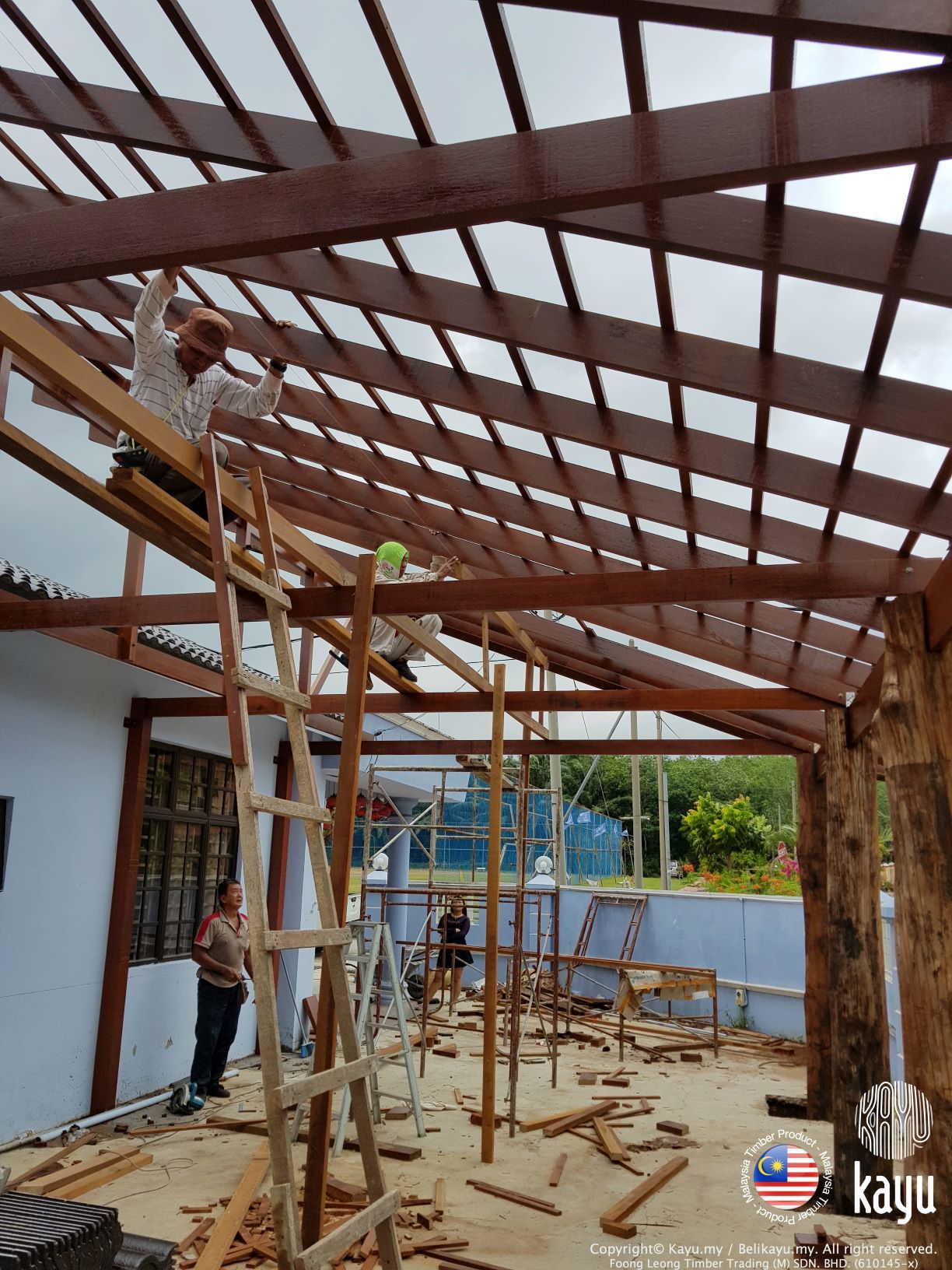
The timber is suitable for all forms of heavy construction, marine construction, ship and boat building (keels, keelsons and framework), piling, beams, columns (heavy duty), bridges, wharves, cooling tower (structural member), railway sleepers, vehicle bodies (framework and floor boards), boat building, plywood, joinery, cabinet making, mallets, fender supports, door and window frames, staircase (carriage, newel and stringer), pallets (heavy and permanent type), tool handles (impact), telegraphic and power transmission posts and cross arms, posts, joists, rafters, flooring (heavy traffic), decking and heavy duty furniture.
Information shared by "mtc.com.my".